
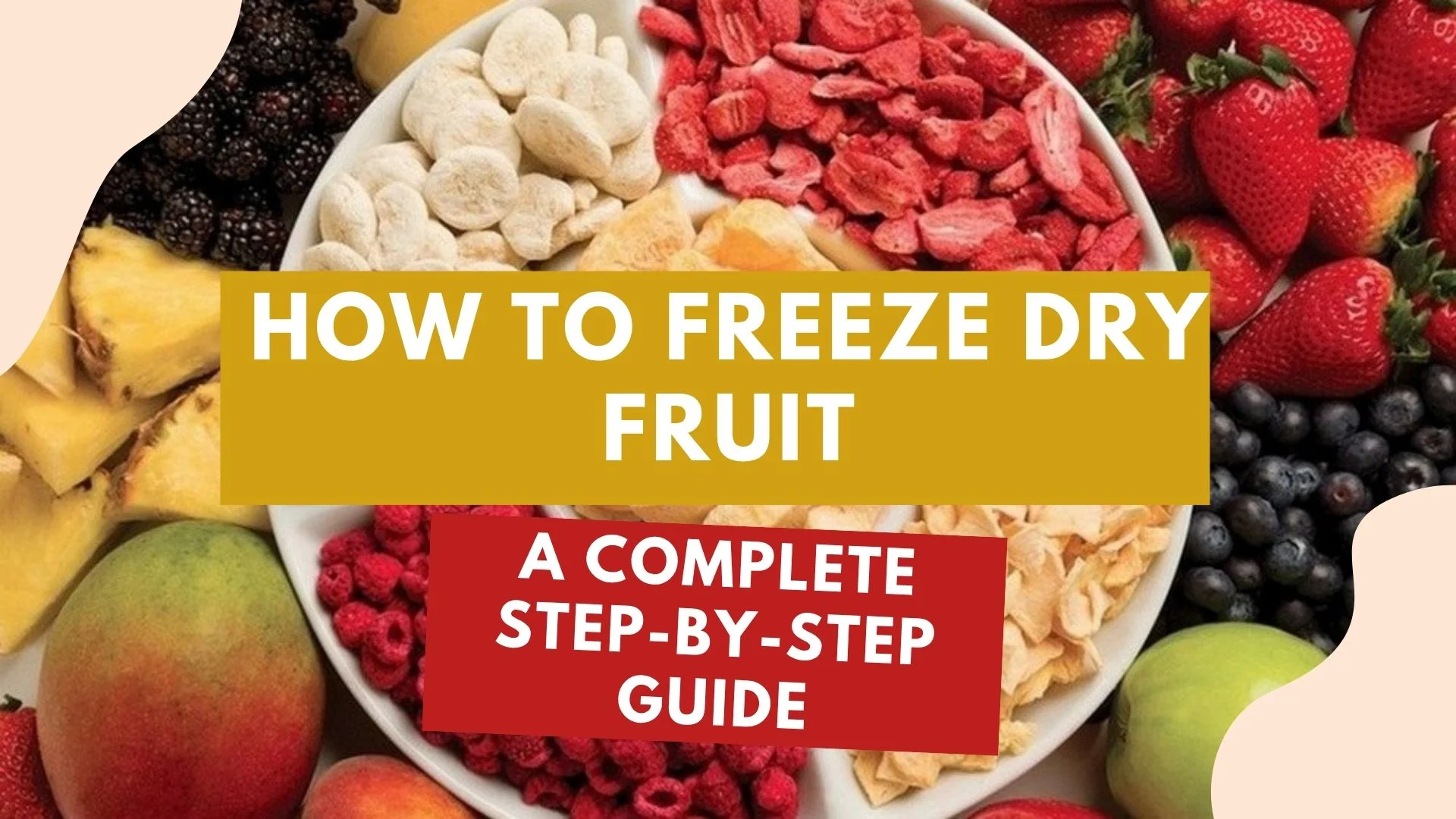
Learning how to freeze dry fruit can extend your harvest for up to 25 years while preserving maximum nutritional value. In fact, freeze drying retains more antioxidants, flavonoids, and vitamin C than any other preservation method.
Sounds impressive, right?
We’ll walk you through everything you need to know about freeze drying fruit at home. You’ll discover how to freeze dry fruit using a freeze dryer for professional results, plus two budget-friendly methods to freeze dry fruit without a machine. Let’s dive in!
You can explore our range of premium dehydrated fruits online if you want ready-made freeze dried options without making them at home.
What Is Freeze Drying? (And How Does It Work?)
Freeze drying, also known as lyophilization, removes water from frozen food through sublimation. This means frozen water transitions directly from solid ice to vapor without passing through a liquid state. The process was first used during World War II to preserve blood plasma and medicine for troops.
The Freeze Drying Process Explained
The freeze drying process unfolds in three distinct phases:
Freezing: Food is frozen at extremely low temperatures, around -40°C to -80°C. This rapid freezing locks the food’s composition and forms ice crystals that preserve cellular structure.
Primary Drying (Sublimation): The frozen product enters a vacuum chamber where pressure drops significantly. Gentle heat application causes ice to sublimate directly into vapor. This phase removes approximately 95% of water content.
Secondary Drying (Adsorption): Temperature increases slightly while maintaining vacuum conditions. This removes remaining bound water molecules, achieving final moisture levels of 1-5%. Home freeze dryers remove 99% of water from food.
Why Freeze Drying Preserves Nutrients Better
Freeze drying operates at low temperatures, which prevents nutrient degradation. Studies show freeze dried food retains 97% of its nutrition. The cold vacuum process preserves vitamins, minerals, and heat-sensitive compounds like vitamin C and B vitamins.
Research confirms freeze drying is the most effective method for retaining antioxidants, including anthocyanins and flavonoids. The process maintains the food’s original flavor, color, and texture without causing shrinkage or toughening.
Freeze Drying vs. Dehydrating: What Is the Difference?
Dehydration uses heat (40-70°C) and airflow to evaporate water, removing only 70-90% of moisture. In contrast, freeze drying removes 99%. This difference affects shelf life dramatically: freeze dried foods last 15 to 25 years, whereas dehydrated foods typically last 1 year or less.
The nutritional gap is substantial. Dehydrated food retains only 60% of its original nutrition due to heat breaking down vitamins and minerals. Freeze dried foods also weigh considerably less and rehydrate faster than dehydrated versions.
List of Best Fruits to Freeze Dry
Not all fruits respond equally to the freeze drying process. Water content, sugar levels, and cellular structure determine which fruits produce the best results.
Berries top the list for freeze drying success. Strawberries, blueberries, raspberries, and black barberries maintain their flavor intensity and rehydrate beautifully. Their small size also speeds up processing time. You can explore our range of premium dried berries online in Pakistan.
Tropical fruits work exceptionally well. Mangoes, pineapples, and bananas create crispy, intensely flavored snacks. Similarly, kiwi and papaya preserve their vibrant colors and nutritional profiles.
Stone fruits require proper preparation but deliver excellent results. Peaches, plums, black cherries, and apricots should be pitted and sliced uniformly. These fruits retain their natural sweetness without added sugar.
Apples and pears freeze dry reliably when sliced thin. Their firm texture holds up during the process, creating shelf-stable chips that last for years.
Grapes transform into concentrated flavor bombs. Both red and green varieties work well, though removing seeds from certain types improves the final texture.
Citrus fruits can be freeze dried, but require extra care. Oranges, lemons, and limes should be sliced thin to prevent rubbery textures. The zest freeze dries particularly well for culinary uses.
Avoid freeze drying watermelon or cantaloupe as their extremely high water content and soft structure produce inconsistent results. However, honeydew works better than these two melons.
When selecting fruit to freeze dry at home, choose ripe but firm specimens. Overripe fruit creates sticky, difficult-to-process batches, while underripe fruit lacks flavor intensity.
Equipment and Supplies You Will Need
The equipment you need depends on which method you choose to freeze dry fruit at home. Each approach requires different tools and investment levels.
For the Freeze Dryer Method (Recommended)
A home freeze dryer is the cornerstone of this method. Harvest Right manufactures the primary residential freeze-drying machines available. Prices range from approximately $2,000 to over $10,000 for small commercial units.
Your purchase typically includes a vacuum pump (oil-based), vacuum pump oil, oil filter, stainless steel trays (set of 4), guide to freeze drying, 50-count Mylar bags, 50-count oxygen absorber packets, and an impulse sealer. An oil-less pump costs around $1,600 as an upgrade.
Additionally, gather sharp knives or a mandoline for uniform slicing. Pre-freezing trays or cookie sheets speed up processing time. A 5-gallon bucket collects water drainage during defrost cycles.
Storage supplies matter for long-term preservation. Mylar bags (1-gallon size) with 300cc oxygen absorber packets cost around $24 for a 60-pack. You’ll need either an impulse sealer or vacuum sealer for proper packaging.
Plan for a dedicated space with proper electrical supply. The machine measures 30″ tall x 20″ wide x 25″ deep and weighs 115-125 lbs. Standard 110-volt outlets work for small to medium dryers.
For the Freezer Method (DIY/Budget)
This method requires minimal investment. You need baking sheets, a regular home freezer, and airtight containers or vacuum-sealable bags. Thin, uniform slicing tools help speed the process.
For the Dry Ice Method (Faster DIY)
Gather dry ice, insulated gloves and goggles for safety, an insulated cooler, airtight containers, and a sealing machine. Dry ice sublimates at -78.5°C, providing ideal freeze-drying temperatures.
Method 1: How to Freeze Dry Fruit Using a Freeze Dryer (Best Results)
Using a freeze dryer produces superior results compared to DIY methods. This approach preserves fruit’s original color, texture, and nutritional content better than any alternative.
Step 1: Select Your Fruit at Peak Ripeness
Fresh fruit freeze dries better than store-bought frozen varieties. Peak ripeness delivers optimal flavor intensity. Avoid overripe or bruised specimens, as freeze drying concentrates both good and bad qualities.
Step 2: Wash and Dry the Fruit Thoroughly
Wash fruit in cold water, then dry completely. Excess moisture forms ice crystals that lengthen processing time.
Step 3: Peel, Core, and Slice
Slice fruit less than 1/2 inch thick for efficient drying. Even thickness ensures uniform results. Citrus requires thinner slices due to membranes.
Step 4: Arrange on Freeze Dryer Trays
Place fruit in a single layer without overlapping. Line trays with parchment paper if desired.
Step 5: Pre-Freeze the Fruit (Optional but Recommended)
Pre-freezing can save 8+ hours on high-water content foods. If pre-freezing, run the machine’s refrigeration for 30-45 minutes first.
Step 6: Run the Freeze Dryer
The default freeze cycle runs 9 hours. Primary drying temperature defaults to 115°F for most fruits. Delicate fruits like watermelon need 30°F. The process takes 24-36 hours total.
Step 7: Check for Completeness
Fruit should feel crispy with no moisture. Weigh trays before and after additional drying cycles to confirm completion.
Step 8: Package and Store Immediately
Transfer freeze dried fruit quickly into airtight containers. Dried fruit absorbs moisture rapidly from air.
Method 2: How to Freeze Dry Fruit Using a Regular Home Freezer (Budget Method)
Home freezer freeze drying offers an accessible entry point for those without specialized equipment. This method requires patience but delivers functional results at minimal cost.
Step 1: Prepare and Slice the Fruit
Wash your chosen fruit thoroughly to remove dirt and contaminants. Cut the fruit into small slices or chunks. Smaller pieces facilitate moisture removal more efficiently. Dry the fruit after washing to avoid excess ice crystal formation.
Step 2: Arrange on Baking Sheets
Place sliced fruit on a baking tray in a single layer. Avoid overlapping or stacking pieces. Proper spacing ensures even sublimation throughout the batch.
Step 3: Place in the Freezer
Set the baking sheet in your freezer where it can remain undisturbed. The process takes 2-3 weeks[262]. Check progress periodically. Remove a frozen piece and let it reach room temperature to test completion. Fruit that turns dark or black needs more time, whereas properly freeze dried fruit maintains its color. The fruit should feel completely dry with a crunchy, airy texture.
Step 4: Store in Airtight Containers
Once adequately freeze dried, transfer fruit immediately into airtight containers or Mylar bags. Proper sealing prevents moisture reabsorption that would compromise shelf life.
Method 3: How to Freeze Dry Fruit Using Dry Ice (Faster DIY Method)
Dry ice accelerates the freeze drying process, completing batches in 24 hours. This method works well for small quantities when you need results quickly.
Step 1: Prepare the Fruit
Wash your fruit thoroughly, then peel and cut into uniform pieces. Even sizing ensures consistent drying. Dry the fruit completely after washing.
Step 2: Pre-Freeze the Fruit (Optional)
Spread fruit pieces on a baking sheet and freeze until solid. Pre-freezing speeds up the overall process, though you can skip this step.
Step 3: Set Up Your Cooler
Choose an insulated cooler that allows gas to escape. Never use a sealed container, as sublimating dry ice releases carbon dioxide that can cause the container to burst. Wear insulated gloves when handling dry ice, which maintains a temperature of -78.5°C (-109.3°F).
Place dry ice at the bottom of the cooler. Add your fruit in a gas-permeable bag on top of the dry ice. For larger batches, alternate layers of dry ice and fruit, starting and ending with dry ice.
Step 4: Wait 24 Hours
Leave the cooler partially open or ensure proper ventilation. The sublimation process takes 24 to 36 hours depending on fruit type and quantity.
Step 5: Check and Store
The fruit should feel crispy and completely dry. Transfer immediately into airtight containers or vacuum-sealed bags to prevent moisture reabsorption.
How to Store Freeze Dried Fruit for Maximum Shelf Life
Proper storage after freeze drying determines whether your fruit lasts 25 years or spoils within months. Four primary factors threaten preservation: oxygen, moisture, light, and heat.
The Golden Rules of Storage
Oxygen causes oxidation reactions that degrade fats, vitamins, and flavor compounds. Oxygen absorbers remove this threat by containing iron powder that rusts when exposed to air. For a 1-quart container, use a 100cc oxygen absorber; 1-gallon containers need 300cc; 5-gallon containers require three 1000cc packets.
Moisture creates an environment where microorganisms grow and chemical reactions occur. Store containers in locations with humidity below 15%. Avoid basements or poorly ventilated spaces with high humidity.
Light accelerates nutrient breakdown, causing discoloration and vitamin loss. Clear glass jars require storage in dark pantries, basements, or cellars.
Heat destroys proteins and vitamins while affecting color, flavor, and odor. The optimal storage temperature ranges between 32°F and 75°F. Each 10°C temperature increase doubles the rate of food degradation.
Expected Shelf Life by Storage Method
Unopened freeze dried fruit lasts 25 to 30 years when stored properly. Once opened, shelf life drops to 6 to 12 months. Reseal containers immediately after each use to maintain quality.
Nutritional Benefits of Freeze Dried Fruit
Freeze dried fruit holds up to 90% of its original nutritional content. This preservation rate makes it nearly as nutritious as fresh fruit, delivering vitamins, minerals, fiber, and phytochemicals in every bite.
For a complete breakdown of calories and nutrients in popular dried berries and fruits, read our dried berries calories guide.
The process excels at retaining specific nutrients. Research confirms freeze drying is the most effective method for preserving antioxidants, including anthocyanins, flavonoids, and ascorbic acid. These compounds fight oxidative stress in your body and provide most of the health benefits associated with fruit consumption. In fact, thiamin and vitamin C survive the process particularly well.
Freeze dried fruit offers practical advantages beyond nutrition. The fruit rehydrates completely while retaining almost all its nutrients, making it versatile for cooking and baking. Since manufacturers rarely add sugar during processing, you get pure fruit without unnecessary sweeteners.
The lightweight, portable nature makes freeze dried fruit ideal for travel, camping, and emergency food supplies. You can store it for decades without refrigeration.
However, consider two factors when consuming freeze dried fruit. The lack of water makes it less filling than fresh fruit. In addition, removing water creates a more concentrated, calorie-dense product. A serving of freeze dried fruit contains the same calories as fresh fruit but in a smaller volume.
Creative Ways to Use Freeze Dried Fruit
Freeze dried fruit opens up culinary possibilities that fresh fruit cannot match. The lack of excess moisture means you can stir it directly into cookie dough, muffin batter, and cake recipes without altering consistency. For instance, fresh strawberries would make chocolate chip cookies soggy, but freeze dried strawberries blend seamlessly while delivering intense berry flavor.
You can use freeze dried fruit whole or pulverize it into powder. Coarsely chopped pieces work well in muffins and breakfast breads. Powdered forms excel in buttercream frostings, meringues, whipped cream, and glazes, adding natural color without artificial dyes. Place fruit in a food processor with confectioners’ sugar (2 parts fruit to 1 part sugar) to create vibrant, flavored powders for dusting cookies, doughnuts, and marshmallows.
In addition to baking, freeze dried fruit enhances beverages. Blend it into smoothies for concentrated flavor and thickness, or simmer it with equal parts water and sugar to create colorful simple syrups for cocktails, tea, and dessert toppings. Sprinkle whole pieces over yogurt parfaits, oatmeal, or ice cream for crunchy texture. Mix into trail mix with fresh nuts and organic seeds for portable snacks.
Similarly, freeze dried fruit makes an eye-catching decoration for cakes and cupcakes while adding authentic fruit taste your guests will notice.
Common Mistakes to Avoid
Several operational errors can ruin an otherwise perfect freeze drying batch. Cross-contamination poses serious health risks when mixing raw meat with fruits or vegetables, as freeze drying preserves bacteria rather than killing it. Scientists use freeze drying to preserve bacteria samples, meaning pathogens on raw meat survive the process intact.
Flavor transfer creates another problem. Even in a vacuum chamber, strong-smelling foods like onions or garlic transfer taste to delicate fruits. In particular, green beans and bananas processed together result in unappetizing green bean-flavored bananas.
Preparation mistakes extend processing time unnecessarily. Fruits with tough skins like grapes, blueberries, and cherry tomatoes require puncturing or slicing to allow moisture escape. Similarly, uneven or oversized pieces create inconsistent results, with some portions overdrying while others remain moist.
Overloading creates ice buildup inside the drum, forcing you to stop mid-cycle, defrost the unit, and restart. Small units handle 4-7 lbs per batch, medium units 7-10 lbs, and large units 12-16 lbs.
Storage errors waste hundreds of dollars worth of food. Freeze dried fruit absorbs moisture rapidly from any air exposure, requiring completely airtight, oxygen-free containers immediately after processing. Skipping tray liners makes removal difficult, risking moisture reabsorption during warm-up.
Final Thoughts
You now have everything you need to freeze dry fruit at home and preserve your harvest for decades. Whether you invest in a dedicated freeze dryer or start with the budget-friendly freezer method, the key is proper preparation and storage.
Above all, remember that storage matters just as much as the drying process itself. Use oxygen absorbers, airtight containers, and cool storage locations to maximize shelf life.
Start with small batches to learn the process, then scale up as you gain confidence. Your freeze dried fruit will retain 97% of its nutrition while lasting up to 25 years when stored correctly.
If you prefer ready-made options, shop premium dry fruits online in Pakistan at Dry Fruits Mart with fast nationwide delivery.
FAQs
Q1. Can I freeze dry fruit at home without a machine?
Yes, you can freeze dry fruit at home using two budget-friendly methods. The freezer method involves placing sliced fruit on baking sheets in your regular freezer for 2-3 weeks until completely dry. Alternatively, the dry ice method uses an insulated cooler with dry ice to freeze dry fruit in just 24 hours. While these DIY methods take longer or require special materials, they produce functional results without the investment of a dedicated freeze dryer.
Q2. What fruits work best for freeze drying?
Berries like strawberries, blueberries, raspberries, and blackberries are ideal for freeze drying as they maintain intense flavor and rehydrate beautifully. Tropical fruits such as mangoes, pineapples, and bananas also produce excellent results with crispy texture and concentrated taste. Stone fruits (peaches, cherries, plums), apples, pears, and grapes all freeze dry successfully when properly prepared. However, avoid watermelon and cantaloupe due to their extremely high water content, which produces inconsistent results.
Q3. How long does freeze dried fruit last?
When stored properly in airtight containers with oxygen absorbers, freeze dried fruit can last 25 to 30 years unopened. The key to maximum shelf life is protecting the fruit from oxygen, moisture, light, and heat. Store containers in cool locations (32°F to 75°F) with low humidity (below 15%). Once opened, freeze dried fruit maintains quality for 6 to 12 months if resealed immediately after each use.
Q4. Does freeze dried fruit retain its nutritional value?
Freeze dried fruit retains up to 97% of its original nutrition, making it nearly as nutritious as fresh fruit. The low-temperature process preserves vitamins, minerals, fiber, and antioxidants exceptionally well, particularly vitamin C, thiamin, anthocyanins, and flavonoids. This makes freeze drying the most effective preservation method for maintaining nutritional content compared to other techniques like dehydration, which only retains about 60% of nutrients.
Q5. What’s the difference between freeze drying and dehydrating fruit?
Freeze drying removes 99% of water through sublimation at low temperatures, while dehydration uses heat to evaporate only 70-90% of moisture. This difference significantly impacts shelf life—freeze dried fruit lasts 15 to 25 years compared to about 1 year for dehydrated fruit. Additionally, freeze dried fruit retains 97% of its nutrition versus only 60% for dehydrated fruit, weighs less, and rehydrates faster while maintaining better flavor, color, and texture.
About the Author: Sharjeel Yaseen