
Many people spend years looking for a simple, natural skincare solution. Coconut oil is one of the most widely used options – a versatile ingredient with a long history in traditional skincare.
It is valued mainly for its deep moisturising effect, and it can earn a place in a daily skincare routine when it suits your skin type. The best part about coconut oil is its natural origin and it’s available to everyone.
This guide explains coconut oil’s skin benefits, who it suits and who should avoid it, and practical ways to use it. If you are interested in overall Benefits Please Click Coconut Oil Benefits Where You will Know about all benefits of Coconut Oil.
What is Coconut Oil
Here is what coconut oil is and why it works well on skin.
Coconut oil comes from coconut meat – the white flesh inside coconuts. It stays solid at room temperature below 25°C (77°F) and turns into a clear liquid when heated. Its unique composition sets it apart – it contains 80-90% saturated fat. The oil is rich in medium-chain fatty acids that make up about 65% of its total composition.
Quality varies a lot between coconut oils. You’ll find two main types:
- (Unrefined) Coconut Oil: This is the better choice for skincare. It comes straight from fresh coconut meat without additional processing, which preserves its natural coconut scent and beneficial compounds.
- Refined Coconut Oil: This variety undergoes additional processing, including bleaching and deodorizing. The process removes the coconut scent but also strips away some natural nutrients.
How the oil is extracted affects its quality. The two most common methods are cold-pressing (extraction without heat) and expeller-pressing (some heat during extraction).
For skincare, choose Pure coconut oil. This type keeps more natural nutrients and beneficial compounds intact. Its high lauric acid content – about 46-48% – proves incredibly beneficial for skin health.
Coconut oil’s chemical structure makes it special. The oil contains phospholipids, tocopherols (vitamin E), and other beneficial compounds. These components contribute to its skincare properties.
This oil’s versatility makes it a skincare superstar. It serves multiple purposes – from moisturizing dry skin to removing makeup and fighting signs of aging. Its natural composition provides both moisturizing and antibacterial benefits.
Note that quality matters when selecting coconut oil for your skin. Look for organic, cold-pressed virgin coconut oil for the best results. Pure oil has a distinct coconut aroma and becomes clear when liquefied – both reliable indicators of quality.
Why Is Coconut Oil Good for Skin?
Coconut oil’s reputation in skincare is not just folklore – several of its uses are supported by research. Here is why it can deserve a place in your routine.
The magic happens because of coconut oil’s unique makeup. Research shows that about 65% of coconut oil contains medium-chain fatty acids. These components work as powerful allies for your skin’s health. Here’s what makes them so special:
- Lauric Acid: Makes up nearly 50% of the fatty acids, providing antimicrobial benefits
- Medium-Chain Fatty Acids: Help protect against harmful microorganisms
- Natural Antioxidants: Support skin healing and protection
One of coconut oil’s main strengths is how it supports the skin’s natural barrier. Clinical studies show that virgin coconut oil substantially improves skin barrier function. It decreases water loss and increases hydration levels naturally.
Coconut oil also has anti-inflammatory properties. Studies show it suppresses inflammatory markers while it protects and strengthens the skin barrier. People with sensitive or irritated skin benefit from these properties substantially.
Scientists have found that coconut oil works at our skin’s molecular level. It increases the expression of vital skin proteins like Aquaporin-3, involucrin, and filaggrin. These technical terms might sound complex, but they play a crucial role in keeping our skin healthy and hydrated.
Research data supporting coconut oil’s benefits looks compelling. Studies highlight its ability to:
- Reduce cutaneous inflammation
- Increase epidermal barrier function
- Improve skin hydration
Coconut oil stands out because it’s so versatile. Research proves it works for skin concerns of all types. Clinical studies confirm it helps with conditions from mild to moderate atopic dermatitis. This makes it valuable for any skincare routine.
Safety matters most when recommending skincare ingredients. Scientific studies confirm that virgin coconut oil stays non-toxic and non-irritating to the skin. Most skin types tolerate it well, but you should always do a patch test first.
Coconut oil also has antimicrobial properties. Medium-chain fatty acids in the oil protect against harmful microorganisms. This makes it both a moisturizer and a protective shield for your skin.
Quality matters: virgin coconut oil generally gives better results than refined oil. It provides superior benefits, especially in boosting antioxidant levels and protecting your skin.
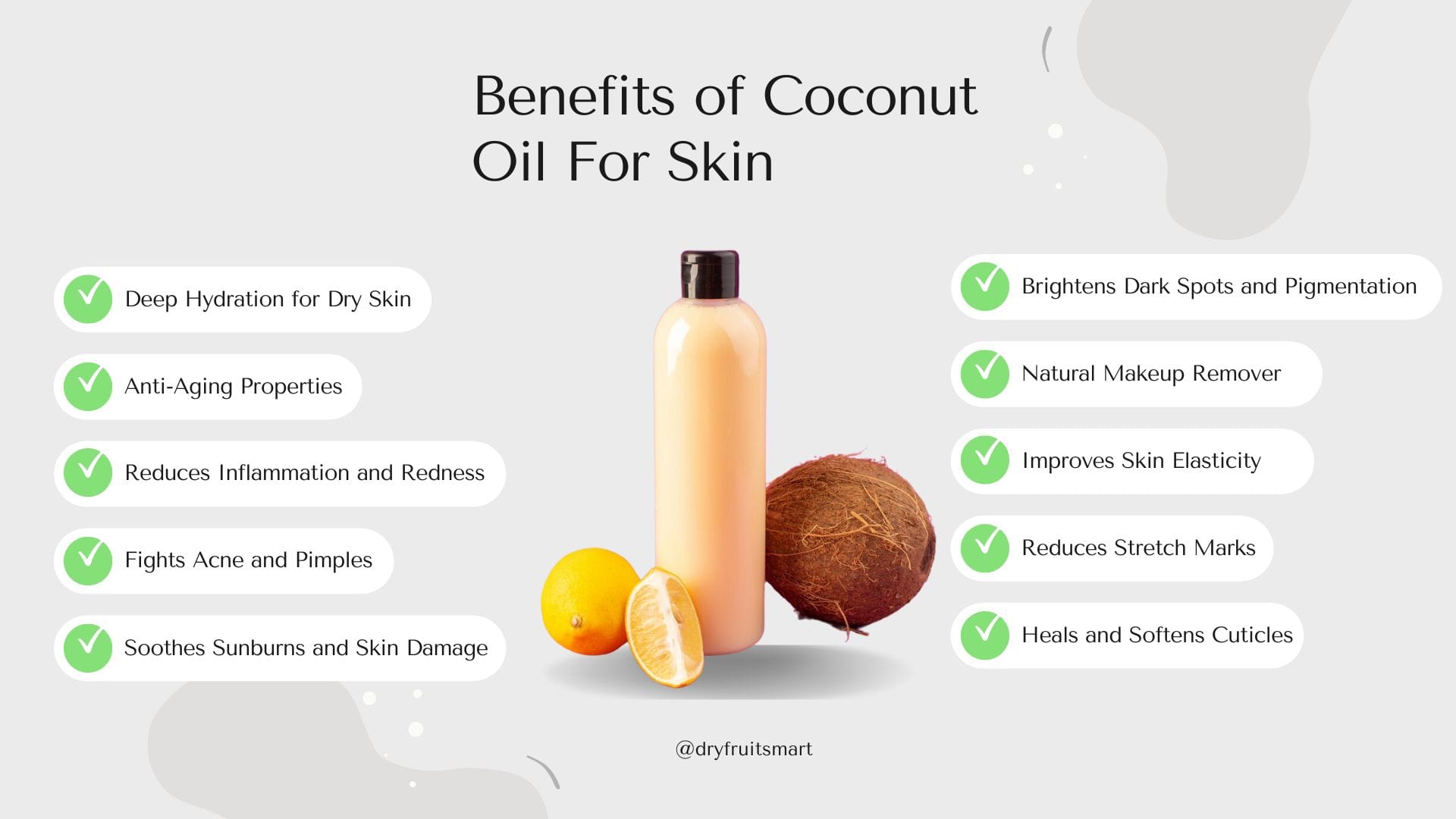
10 Surprising Benefits of Coconut Oil for Skin
Coconut oil’s benefits for skin go beyond simple moisturising. These are the main ones.
1. Deep Hydration for Dry Skin
Coconut oil’s emollient properties make it a perfect moisturizer for dry, flaky skin. It locks in moisture and creates a protective barrier to keep your skin soft and supple.
2. Anti-Aging Properties
Packed with antioxidants like vitamin E, coconut oil fights free radicals that cause premature aging. Regular use can help reduce fine lines and wrinkles.
3. Reduces Inflammation and Redness
Coconut oil’s anti-inflammatory properties make it ideal for soothing irritated skin. It can help calm redness and reduce symptoms of eczema or dermatitis.
4. Fights Acne and Pimples
The lauric acid in coconut oil has antimicrobial effects that can kill acne-causing bacteria. However, it’s best used sparingly on oily or acne-prone skin to avoid clogging pores.
5. Soothes Sunburns and Skin Damage
Apply coconut oil to sunburned areas for immediate relief. Its cooling and hydrating properties accelerate the healing process.
6. Brightens Dark Spots and Pigmentation
Regular application of coconut oil can lighten dark spots and help even out skin tone. Combine it with turmeric or lemon for enhanced results.
7. Natural Makeup Remover
Coconut oil is a gentle and effective way to remove makeup. It dissolves even waterproof makeup without irritating the skin.
8. Improves Skin Elasticity
By boosting collagen production, coconut oil helps maintain your skin’s elasticity and firmness.
9. Reduces Stretch Marks
Pregnant women and those with fluctuating weight can benefit from coconut oil’s ability to hydrate and fade stretch marks over time.
10. Heals and Softens Cuticles
Apply coconut oil to your nails and cuticles to keep them hydrated, healthy, and strong.
The science behind these benefits makes them even more impressive. Virgin Coconut Oil (VCO) has biodegradable, biocompatible components with low toxicity. This makes it a reasonable choice for daily use on most skin types.
Virgin, organic coconut oil works best – it’s the purest form with the most skin health benefits. A little goes a long way. Consistent use of small amounts delivers these impressive benefits.
Note that coconut oil might not work for everyone, especially if you have very oily or acne-prone skin. A patch test before full application is always smart.
How to Use Coconut Oil for Skin
Here is how to use coconut oil on your skin.
Simple Application Steps:
- Start with clean, slightly damp skin
- Take about a tablespoon of coconut oil and warm it between your palms
- Apply in gentle circular motions
- Pat away any excess with a soft tissue (avoid cotton balls)
- Let it absorb naturally
Coconut oil’s versatility makes it special. It works great as a makeup remover – just massage it onto your face to dissolve even stubborn waterproof makeup. A gentle water-based cleanser afterward ensures complete residue removal.
Timing matters most when using coconut oil for body moisturizing. The quickest way is to apply it right after bathing while your skin stays slightly damp. This helps lock in moisture.
Tips for different uses:
- For dry skin: Apply a slightly thicker layer and leave it overnight
- For cuticles: Massage into nail beds for at least 30 minutes
- For stretch marks: Use twice daily with gentle circular motions
- For sunburn relief: Wait until the original heat subsides, then apply gently
Quality affects results substantially. Organic, unrefined, cold-pressed coconut oil works best. This type keeps more beneficial compounds and gives maximum skin benefits.
Important Precautions: Coconut oil works wonders for many skin types but isn’t right for everyone. People with oily or acne-prone skin should avoid applying it to their face, chest, and upper back areas. These areas have more oil glands and coconut oil might clog pores.
A simple overnight method: liquefy a small amount between your palms, apply a thin layer to clean, dry skin, and gently remove the excess with a soft tissue. Your pillowcase stays clean while your skin gets all the benefits.
Combining coconut oil with gentle exfoliation works amazingly. Mix it with sugar to create a natural body scrub that exfoliates and moisturizes. Using this once or twice weekly prevents over-exfoliation.
Note that coconut oil can’t replace sunscreen. It helps after sun exposure but doesn’t protect against UV rays. Use it only for after-sun care, never as sun protection.
A patch test helps with sensitive skin areas. Apply a small amount to your inner arm and check for reactions after 24 hours. This quick check can help you avoid a reaction.
Virgin vs Refined Coconut Oil for Skin
Not every coconut oil gives the same results on skin. The main difference comes from how the oil is made.
| Feature | Virgin (Unrefined) Coconut Oil | Refined Coconut Oil |
|---|---|---|
| How it is made | Pressed from fresh coconut meat with minimal processing | Made from dried coconut (copra), then bleached and deodorised |
| Natural antioxidants | Retained | Largely reduced |
| Smell | Mild natural coconut aroma | Neutral |
| Best suited for | Skincare and hair care | High-heat cooking |
For skincare, choose oil labelled virgin, unrefined or cold-pressed, with no added fragrance. Good-quality coconut oil is clear when liquid, white when solid (below about 24°C) and smells lightly of coconut.
Coconut Oil for Different Skin Types
How well coconut oil suits you depends mostly on your skin type, because it rates about 4 out of 5 on the comedogenic (pore-clogging) scale.
Dry skin
Dry skin usually benefits the most. Apply a thin layer straight after bathing while the skin is still slightly damp, so the oil seals in moisture. Focus on rough areas such as elbows, knees and heels, and reapply when the skin feels tight.
Combination skin
Use it only where your skin is dry and keep it away from oily areas:
| Area | How to use | How often |
|---|---|---|
| Dry patches (cheeks, body) | Thin layer | Daily |
| T-zone (forehead, nose, chin) | Very small amount, or skip | 2–3 times a week at most |
| Oily or acne-prone areas | Avoid direct application | — |
Sensitive skin
Start with a patch test on the inner arm and wait 24 hours. Use only cold-pressed virgin coconut oil, begin with a very thin layer and increase slowly if there is no irritation. Mixing a few drops with aloe vera gel gives a lighter, more soothing texture.
Oily or acne-prone skin
Avoid using pure coconut oil on the face, chest and upper back, where it is most likely to clog pores. Body use on dry areas is usually fine.
A Simple Coconut Oil Skin Routine
Morning
- Rinse your face with lukewarm water and pat it slightly damp.
- Warm a pea-sized amount of coconut oil between your palms.
- Press it gently onto dry areas only.
- Wait 5–10 minutes before sunscreen or makeup. Coconut oil is not a substitute for sunscreen.
Evening
- Cleanse your skin. Coconut oil can be used first to dissolve makeup, followed by a gentle face wash.
- Massage a slightly larger, marble-sized amount into dry areas.
- Let it absorb for 15–20 minutes, then blot any excess with a soft tissue.
How much and how often
- Face (morning): about a pea-sized amount
- Face (night): about a marble-sized amount
- Body after bathing: about a teaspoon for arms and legs
Start once a day, watch how your skin reacts over two weeks, and only then increase to twice a day if needed. Store the oil in a cool, dark place, ideally in a glass container.
DIY Coconut Oil Face Masks
Coconut oil mixes well with a few kitchen ingredients:
| Ingredient | Why combine it with coconut oil |
|---|---|
| Honey | Extra moisture and a smoother feel |
| Aloe vera gel | Lighter texture and a cooling feel |
| Turmeric | A traditional ingredient used in face packs for an even-looking tone |
Honey and coconut oil mask (for dry skin)
- 2 teaspoons coconut oil
- 1½ teaspoons raw honey
Mix, apply in gentle circles, leave for 10–15 minutes and rinse with lukewarm water.
Turmeric and coconut oil mask
- ½ teaspoon turmeric powder
- 1 tablespoon raw honey
- 1 tablespoon coconut oil
Apply for 10 minutes, then rinse well. Turmeric can stain light-coloured fabric and may tint fair skin briefly, so test on a small area first. Use these masks 2–3 times a week at most, and always patch test new combinations.
Can we apply Coconut Oil on Face?
“Can we apply coconut oil on our face?” is one of the most common questions about it. The answer depends on your skin type.
Let’s talk about the big issue – coconut oil scores 4 on the comedogenic scale (which rates how likely something is to clog pores, from 0-5). This high score is why it needs care on the face.
Coconut oil may not be the best choice in these situations:
- Oily or Combination Skin: The oil can clog pores and lead to breakouts
- Acne-Prone Areas: Face, chest, and upper back need extra care
- Sensitive Areas: Under-eye region and thin-skinned areas
- Blackhead-Prone Skin: May increase blackhead formation
Coconut oil works as a sealant that traps moisture in the skin. That is useful on dry skin, but on the face it can also trap oil and lead to clogged pores and breakouts.
Coconut oil generally shouldn’t replace your regular facial moisturiser. Here are better ways to use it in your skincare routine:
- Spot Treatment: Use it only on very dry patches
- Eye Area: Use it lightly around the eyes (if you don’t get milia)
- Nighttime Treatment: Add it to your evening routine if you have very dry skin
- Product Alternative: Pick products with coconut oil as an ingredient instead of pure oil
Coconut oil works very differently on different skin types. Some people break out, while others – especially those with very dry, flaky skin – see good results.
Here’s a vital tip: if you want to try coconut oil on your face, look for these qualities in your product:
- Unrefined
- Virgin
- Extra virgin
Research shows that unrefined coconut oil, made by pressing coconut flesh without chemicals, gives the best skincare results. Still, you should always do a patch test first, even with top-quality oil.
The oil behaves differently on wet and dry skin. Putting it on slightly damp skin helps lock in moisture better. Just be careful not to use too much.
Less is more. Start with a tiny amount – think small pea size – and adjust based on how your skin reacts.
People often think coconut oil can replace sunscreen. It helps after sun exposure but shouldn’t be your only sun protection. Its SPF is way below what the FDA recommends.
If pure coconut oil feels too heavy, try products that mix it with water-based ingredients. You’ll get the benefits without risking clogged pores.
Note that everyone’s skin reacts differently. Some people love coconut oil in their face routine, while others break out. Success depends on knowing your skin type and watching how it responds to this natural ingredient.
Conclusion
Coconut oil is a simple, natural skincare option that moisturises deeply and suits many dry-skin routines. At DryFruitsMart.PK, we offer organic and Pure coconut oil that retains all the essential nutrients to nourish your skin naturally.
The quality of coconut oil affects your skin by a lot. Virgin, organic coconut oil works best because it keeps all the good compounds that make it great for your skin. Note that your skin type matters – coconut oil is perfect for dry skin, but people with oily or acne-prone skin should be careful about using it on their face.
Studies show it can improve skin barrier function and hydration. This explains why skincare experts recommend coconut oil as part of natural beauty routines.
You should start with a small amount of coconut oil and test it on a patch of skin. Pay attention to how your skin reacts and make changes if needed. You might soon find out why this natural ingredient has become popular in skincare routines worldwide.
FAQs about Coconut Oil for Skin
These are the most common questions about using coconut oil on skin.
Is coconut oil safe for all skin types?
Coconut oil is generally safe, but it doesn’t work for everyone. Coconut oil ranks high on the comedogenic scale, which means it can clog pores. People with oily or combination skin should use coconut oil extracts instead of pure oil.
What if I’m allergic to coconut oil?
Coconut allergies aren’t as common as other allergies, but they do happen. Watch for:
- Mild symptoms: skin rash, hives, or blistering
- Severe reactions: nausea, vomiting, or breathing difficulties
How do I know if coconut oil is right for my skin?
Patch testing is vital. Put a small amount on your inner arm and check for reactions after 24 hours.
What type of coconut oil should I choose?
Unrefined, virgin, organic coconut oil is best for skincare. You’ll get:
- No harsh chemicals
- Maximum nutrient retention
- Better skin benefits
Can coconut oil help with skin conditions?
Studies suggest coconut oil can help with:
- Eczema and dry skin
- Wound healing
- Inflammation reduction
Will coconut oil make my acne worse?
This is a common concern. Coconut oil has antimicrobial properties, but it can make acne worse for some people. It’s especially problematic for:
- Oily skin types
- Acne-prone areas
- Areas with large pores
How should I apply coconut oil to get the best results?
Applying coconut oil to damp skin works best. This approach will:
- Lock in moisture
- Improve absorption
- Give better hydration
Can I use coconut oil around my eyes?
Coconut oil is safe around the eyes, but stick to unrefined, cold-pressed varieties. If you tend to get milia (small white bumps), stay away from this area.
Does coconut oil protect against sun damage?
This is a common myth. Coconut oil helps with after-sun care, but don’t use it instead of sunscreen. It’s nowhere near the minimum FDA recommendation for SPF protection.
How often should I use coconut oil?
How often depends on your skin’s needs. People with dry skin or eczema might need it more often. Start with less and adjust based on how your skin responds.
Can coconut oil replace my regular moisturizer?
Coconut oil is great for moisturizing, but research shows it works better alongside your regular moisturizer. It seals in moisture rather than adding it to your skin.
What about using coconut oil on my scalp?
Research shows coconut oil can help your scalp, but you need to be careful. Some people might develop scalp dermatitis with redness and flaking. Do a patch test first.
Note that coconut oil has many benefits, but understanding your skin’s needs and responses is key. What suits one person might not work for another. Pay attention to your skin’s signals and adjust your routine accordingly.
About the Author: Sharjeel Yaseen