
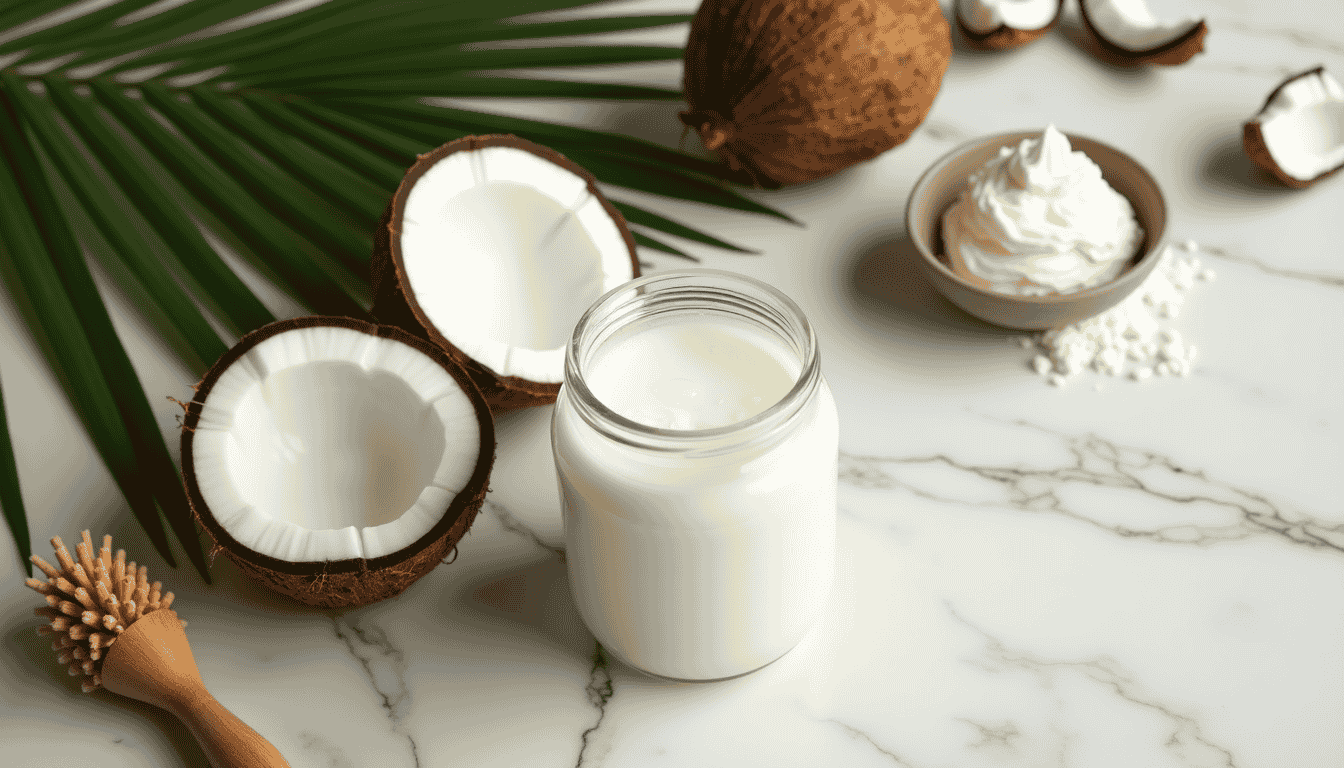
Coconut oil is one of the most versatile products in a home, from the kitchen to the bathroom cabinet. This tropical wonder has taken the world by storm, and with good reason too – it’s much more than just a cooking ingredient.
People have found so many ways to use coconut oil for hair care, skin treatments, and around the house. You can use it to improve your beauty routine, add new flavors to your cooking, or tap into its many benefits, coconut oil in Pakistan has become a staple for many. This versatile oil is not only beneficial for personal care but also widely used in various household applications.
What you’ll learn:
- Different types of coconut oil and how to pick the best one
- Cooking tips and best practices
- Beauty and skincare uses
- Hair care treatments and benefits
- Household applications
- Shopping tips and quality markers
- Green practices and environmental effects
- Facts vs. myths about coconut oil benefits
Understanding Different Types of Coconut Oil
The number of coconut oil types in the market can be confusing. Here’s a simple breakdown to help you pick the right one.
Virgin vs. Refined Coconut Oil
The biggest difference between virgin and refined coconut oil comes from how they’re made. Virgin coconut oil comes straight from fresh coconut meat through quick-drying or wet-milling. The natural coconut flavor and aroma make it a perfect match for tropical-themed dishes.
Refined coconut oil goes through extra steps like bleaching and deodorizing. This oil loses some nutrients but turns out to be super versatile in cooking. Its neutral taste and higher smoke point of 400-450°F make it a kitchen staple.
Key Differences:
- Virgin coconut oil keeps its coconut taste and smell
- Refined coconut oil has no flavor and works better for high-heat cooking
- Virgin coconut oil packs more nutrients and antioxidants
- Refined coconut oil stays fresh longer
Cold-pressed vs. Expeller-pressed
The pressing method affects the oil’s quality by a lot. Cold-pressed coconut oil stays below 120°F during processing, which keeps more nutrients and antioxidants intact. Raw applications and skincare benefit from this oil’s properties.
Expeller-pressed oil comes from using more heat and pressure. This method pulls out 87-95% of coconut’s oils, making it the quickest way to extract oil. The heat might reduce some nutrients, but the oil works great for cooking and costs less while keeping good quality.
Organic vs. Conventional Options
The choice between organic and conventional coconut oil brings up several points. Organic coconut oil skips chemical solvents and preservatives. Fresh coconut meat turns into oil quickly to keep natural flavors and benefits.
Conventional coconut oil usually starts with copra (dried coconut meat) and might use chemical solvents. The price tag is lower, but organic options stand out with:
- Better nutrient retention
- Extended shelf life
- Stronger coconut flavor (in virgin varieties)
- No chemical residues
Your intended use should guide your choice. Organic virgin coconut oil suits skincare and raw recipes. Refined coconut oil suits high-heat cooking or dishes where you don’t want a coconut flavour.
MCT Oil vs Regular Coconut Oil
MCT oil is often sold alongside coconut oil, but they are not the same product. Regular coconut oil naturally contains a large share of medium-chain fatty acids, mainly lauric acid. MCT oil is a processed fraction that keeps only certain medium-chain fats, usually caprylic and capric acid.
| Feature | Regular Coconut Oil | MCT Oil |
|---|---|---|
| What it is | Whole oil pressed from coconut | Refined fraction of coconut or palm kernel oil |
| Main fat | Lauric acid (roughly half of the oil) | Caprylic and capric acid |
| At room temperature | Solid below about 24°C | Stays liquid |
| Flavour | Coconut aroma (virgin) or neutral (refined) | Neutral |
| Typical use | Cooking, baking, skin and hair | Added to drinks and smoothies |
What Coconut Oil Is Made Of
Coconut oil is almost entirely fat. Most of it, around 80–90%, is saturated fat, which is why it turns solid in cooler weather. Lauric acid is the largest single component. Unlike the coconut itself, the oil contains only trace amounts of vitamins and minerals, so it is best treated as a cooking fat rather than a source of nutrients.
Cooking with Coconut Oil
Here is how to get the best results from coconut oil in the kitchen.
Smoke Point and Cooking Methods
Each type of coconut oil reacts differently to heat. Virgin coconut oil has a smoke point of 350°F, which makes it ideal for baking and medium-heat cooking. Use refined coconut oil for higher temperatures up to 400°F. Here’s a guide for each type:
| Type of Oil | Best Cooking Methods |
|---|---|
| Virgin (350°F) | Baking, Sautéing, Light Stir-frying |
| Refined (400°F) | Roasting, Deep-frying, High-heat cooking |
Best Dishes for Coconut Oil
Coconut oil works well in many dishes. Some of the best ways to use it:
- Sweet Creations:
- Crispy-edged pancakes
- Chocolate treats (creates magic shell effect)
- Homemade granola
- Baked goods replacement for butter
- Savory Dishes:
- Roasted vegetables (especially sweet potatoes)
- Sautéed greens and collards
- Stir-fried dishes
- Curry-based meals
Baking with Coconut Oil
- Coconut oil can usually replace butter or other oil in a 1:1 ratio.
- Bring other ingredients to room temperature first. Cold eggs or milk can make melted coconut oil set into lumps.
- Use it solid, like cold butter, for flaky pie crusts and biscuits, and melted for cakes and muffins.
- Brush a thin layer onto baking tins instead of using butter for greasing.
- Virgin coconut oil adds a light coconut flavour. Use refined oil if you want a neutral taste.
How Coconut Oil Compares with Other Cooking Oils
| Oil | Main fat type | At room temperature | Flavour | Common use in Pakistani kitchens |
|---|---|---|---|---|
| Coconut oil | Mostly saturated | Solid in winter, liquid in summer | Coconut (virgin) or neutral (refined) | Baking, curries, sweets |
| Mustard oil (sarson ka tel) | Mostly unsaturated | Liquid | Sharp and pungent | Tadka, pickles (achar), saag |
| Sesame oil (til ka tel) | Mostly unsaturated | Liquid | Nutty | Stir-fries, dressings, finishing |
Many households keep more than one oil and choose by dish. If you cook traditional recipes, mustard oil and sesame oil sit well alongside coconut oil in the kitchen.
Storage and Shelf Life Tips
Proper storage is vital to maintain coconut oil’s quality. The oil works best when kept in a cool, dark place away from sunlight. It naturally shifts between solid and liquid states at 76°F – this is normal and won’t affect its quality.
To keep it fresh, seal the container after each use and only use clean, dry utensils. Refined coconut oil typically lasts up to 18 months. Virgin coconut oil can stay good for up to 3 years with proper storage.
Pro Tips:
- Store away from heat sources like ovens
- Keep in original container or transfer to dark glass jars
- No need for refrigeration unless you live in very hot climates
- Check for any changes in color, smell, or texture regularly
- Replace yearly to get the best nutritional benefits
Beauty and Skincare Applications
Coconut oil has many beauty uses, especially for dry skin and makeup removal.
Face and Body Moisturizing
The timing makes all the difference when using coconut oil as a moisturizer. You’ll get the best results by applying it to slightly damp skin to lock in hydration. Regular use can noticeably improve dryness.
Pro Application Tips:
- Apply a thin layer to damp skin
- Use gentle, upward strokes
- Wait 5-10 minutes before dressing
- Focus on extra-dry areas like elbows and knees
Natural Makeup Removal
Coconut oil also works as an inexpensive makeup remover. The technique matters most here. Take a dime-sized amount, warm it between your palms, and massage it gently onto your dry face. The best part? It melts away even waterproof mascara without any harsh rubbing.
Keep in mind: A gentle facial cleanser should follow to prevent any pore clogging, especially since coconut oil ranks high (4 out of 5) on the comedogenic scale.
DIY Beauty Recipes
Coconut oil is a good base for simple DIY beauty treatments. Here’s an easy multi-purpose recipe:
Hydrating Face Mask:
| Ingredient | Amount | Purpose |
|---|---|---|
| Virgin Coconut Oil | 1 tablespoon | Base moisturizer |
| Raw Honey | 1 teaspoon | Natural antibacterial |
| Aloe Vera Gel | 1 teaspoon | Soothing agent |
Mix these ingredients and leave the mask on for 15-20 minutes. Rinse gently with lukewarm water. The results never disappoint – your skin feels supple and looks radiant.
New users should always start with a patch test. Coconut oil works wonders for many people but might not suit everyone, especially those with acne-prone skin. Apply a small amount behind your ear and wait 24 hours to check for any reactions.
Coconut oil can penetrate deeper than many commercial moisturisers because of its low molecular weight. It works especially well at reducing inflammation and soothing skin conditions like eczema. Coconut oil’s lauric acid content makes up nearly 50% of its fatty acids, providing natural antimicrobial protection while nourishing your skin.
Hair Care Benefits and Uses
Coconut oil is one of the most effective natural hair treatments. The science explains why it works so well – its unique molecular structure lets it penetrate deep into the hair shaft instead of just sitting on the surface.
Deep Conditioning Treatments
Temperature and timing play a vital role to get the most benefits from coconut oil as a deep conditioner. It works best when slightly warmed oil is applied to dry hair, mainly from the middle to the ends. Here’s a simple timing guide:
| Hair Type | Treatment Duration | Best Application |
|---|---|---|
| Fine/Thin | 30-60 minutes | Light application, avoid scalp |
| Medium | 2-4 hours | Moderate coverage |
| Thick/Coarse | 4-8 hours or overnight | Heavy application |
Pro Tip: The oil works better when warmed between the palms before applying it to hair. This helps it sink deeper into the hair shaft.
Scalp Health Applications
Coconut oil does something amazing – it creates a protective barrier on your scalp while tackling common problems. It can help with:
- Dandruff and flakiness
- Dry, itchy scalp conditions
- Bacterial and fungal concerns
- Excessive oil production
Scalp treatments work best when warm coconut oil is massaged directly into the scalp using circular motions. This method helps absorption and boosts blood flow, which improves overall scalp health by a lot.
Hair Growth Support
Coconut oil doesn’t make hair grow faster, but it sets up perfect conditions for healthy hair growth. Its lauric acid helps protect hair proteins, which keeps hair strong and reduces breakage.
A simple weekly routine: apply coconut oil before washing your hair and leave it on for at least two hours before shampooing. This method has cut down protein loss during washing, which leads to stronger and more resilient strands.
Important Note: Less is more. Start with a tablespoon for shoulder-length hair and adjust based on how your hair responds. You’ll get the best results this way. A patch test is always smart, especially if you have sensitive skin or your scalp reacts easily.
Coconut oil stands out because it cuts down protein loss in both damaged and healthy hair. Regular use means fewer split ends, less breakage, and hair that’s easier to manage and looks shinier.
Household and Alternative Uses
Coconut oil does more than cooking and beauty – it is also useful around the house. Its natural antimicrobial properties make it a great alternative to chemical-based products. Here are some simple household uses.
Natural Cleaning Solutions
A simple coconut oil-based solution can replace some chemical cleaners. Here’s an easy all-purpose cleaner recipe:
| Ingredient | Amount |
|---|---|
| Distilled Water | 1 cup |
| Tea Tree Essential Oil | 15 drops |
| Liquid Castile Soap | 1/2 tablespoon |
This mixture works amazingly well against bathroom and kitchen grime. Tough spots need a paste made from coconut oil and baking soda. The paste sits for 10 minutes before gentle scrubbing. Coconut oil’s lauric acid and its natural antimicrobial properties work especially well on showers and countertops.
Pet Care Applications
Coconut oil is sometimes used in pet care, but check with your veterinarian before using it on your pet. When used in small amounts, it helps dogs in several ways:
- Helps maintain coat health and shine
- Soothes dry, irritated skin
- Acts as a natural flea and tick repellent
- Makes medications more palatable
A tiny amount works best to start, while watching for any reactions. Warm the oil between your hands before gently massaging it into the coat, with extra attention to dry patches.
Furniture Polish and Wood Care
Coconut oil turned out to be an amazing natural wood conditioner. The deep-penetrating properties prevent wood from drying and cracking. The natural composition makes it safe for food-contact surfaces like cutting boards.
Polishing wood with it is straightforward: clean the surface, apply coconut oil with a soft cloth in circular motions, let it absorb, then buff away excess. The results speak for themselves – wooden furniture gets a beautiful, natural shine without chemical residue.
Coconut oil works great for wood care because it:
- Penetrates deep into wood fibers
- Prevents moisture damage
- Enhances natural wood tones
- Creates a protective barrier against humidity
Important Note: Test the oil on a hidden spot first since finished woods might react differently. Valuable or antique pieces need a furniture restoration expert’s advice before application.
Shopping Guide and Quality Indicators
Shopping for coconut oil feels like walking through a maze of options and labels. A few simple checks make it much easier to pick a high-quality coconut oil.
Label Reading Tips
One useful thing to look for on imported coconut oil labels is an organic certification such as USDA Organic. This green logo shows that farmers grew the coconuts without pesticides and processed them under strict organic standards. The organic certification guarantees at least 95% organic material in the product.
Must-check items on labels:
- Processing method (cold-pressed, expeller-pressed, or refined)
- Ingredient list (should only have coconut oil)
- Organic certification status
- Production date and shelf life
- Country of origin
Important Note: Many brands use words like “pure” or “natural” without any explanation. Since these terms lack regulation, verifiable certifications are more reliable.
Price vs. Quality Considerations
Price often reflects the processing method and quality. Here’s a simple quality-price guide:
| Processing Type | Price Range | Best Uses |
|---|---|---|
| Cold-Pressed Virgin | Higher | Raw consumption, skincare |
| Expeller-Pressed | Medium | Cooking, hair care |
| Steam-Refined | Lower | High-heat cooking |
Premium oils might cost more upfront but offer better value through:
- Superior nutrient retention
- Better taste and aroma
- Longer shelf life
- Versatility in applications
Storage Container Options
The storage container makes a real difference. Glass containers work best because they prevent chemical leaching and keep the oil pure longer. Coconut oil can stay good for up to two years in proper storage conditions.
A good storage container should have:
- Material: Glass or high-grade stainless steel
- Seal quality: Airtight to prevent oxidation
- Size: Appropriate for usage frequency
- Light protection: Dark or opaque containers preferred
Pro Tip: Long-term storage in plastic containers isn’t ideal as they can leach chemicals into the oil, especially in warm temperatures. Dark glass jars with tight-fitting lids work best for transferring store-bought coconut oil.
Proper storage has a big effect on oil quality. Coconut oil in glass containers keeps its fresh aroma and clear appearance much longer than plastic containers. A cool, dark place away from direct sunlight helps preserve its beneficial properties over time.
Sustainable Production and Environmental Impact
Coconut oil production has both environmental challenges and promising solutions.
Farming Practices
Research shows that green coconut farming reshapes the scene and people’s lives. Agroforestry stands out as the most effective approach. Coconut trees grow among crops like banana, coffee, and cacao. This creates a natural ecosystem and helps farmers earn extra income.
Green practices boost yields remarkably. Farms that use integrated nutrient management and cover cropping report up to 30% higher productivity. These methods also:
- Improve soil fertility naturally
- Cut down chemical fertilizer use
- Support biodiversity
- Generate extra income from diverse crops
Processing Methods
Water management plays a vital role in processing methods. Here’s what different extraction approaches tell us:
| Method | Water Usage | Environmental Impact | Oil Quality |
|---|---|---|---|
| Cold Extraction | Low | Minimal | Highest |
| Expeller Press | Medium | Moderate | Good |
| Chemical Extraction | High | Significant | Variable |
More producers now use low-pressure extraction processes. These save energy and create green biomass. Nothing goes to waste – coconut shells and husks become fuel in a circular production system.
Environmental Considerations
Biodiversity impact raises the most concern. Coconut farming may not harm the environment like other oil crops, but careless expansion threatens local ecosystems. Sustainable certification programs make a real difference.
Fair Trade practices bring the most exciting changes. These programs give farmers fair pay, which promotes green farming methods. Farmers who earn enough don’t need to harm the environment to increase yields.
Water management stands central to green production. Agriculture uses 70% of global freshwater, so innovative water conservation in coconut farming matters greatly. Some facilities now run closed-loop water systems that cut environmental impact substantially.
Organic farming techniques show great promise. These methods skip synthetic fertilizers and pesticides. Natural soil management and pest control take center stage. This protects the environment and keeps harmful residues out of our coconut oil.
Industry experts point out that small-scale farmers grow about 95% of coconuts in major producing countries like Indonesia and the Philippines. Supporting these farmers through green practices and fair trade creates lasting environmental and social benefits.
Common Coconut Oil Mistakes to Avoid
Quick quality checks at home
- Look: pure oil is clear when liquid and bright white when solid.
- Smell: it should smell fresh, either lightly of coconut or of nothing. A sour, rancid or chemical smell is a warning sign.
- Fridge test: put a small amount in the fridge. Pure coconut oil sets evenly. Oil mixed with other oils often sets in patches or layers.
- Melting point: it should melt cleanly at around 24°C.
Storage mistakes
- Keeping the jar next to the stove or in direct sunlight
- Storing it in reactive metal containers instead of glass
- Dipping in a wet or used spoon, which brings in moisture and food particles
- Leaving the lid loose, which lets air in and speeds up oxidation
A dark glass jar in a kitchen cupboard keeps the temperature steady. If you buy a large pack, decant a month’s supply into a smaller jar and keep the rest sealed. Yellowing, an off smell or a change in texture means the oil should be replaced.
Using too much
Coconut oil is calorie-dense, like all fats. Use it in place of other cooking fats rather than adding it on top of them.
Common Myths and Misconceptions
Coconut oil attracts a lot of exaggerated claims. Here is what science actually tells us.
Weight Loss Claims
Many weight loss claims about coconut oil come from misinterpreted studies about MCTs (Medium-Chain Triglycerides). The marketing materials often claim 50-60% MCT content, but coconut oil actually contains nowhere near that amount – just 10-13% of true MCTs.
Recent studies paint an interesting picture:
- A 4-week study with 91 participants showed no major weight differences between groups using coconut oil versus other fats
- An 8-week trial with 32 adults showed that taking 2 tablespoons daily didn’t affect weight
Coconut oil can help you feel full. This feeling comes from its high fat content – a trait common to all dietary fats, not just coconut oil.
Heart Health Debates
The heart health discussion around coconut oil has sparked heated debates in research circles. Here’s how marketing claims stack up against scientific evidence:
| Marketing Claim | Scientific Reality |
|---|---|
| “Heart-healthy alternative” | Contains 92% saturated fat |
| “Raises good cholesterol” | Raises both HDL and LDL |
| “Better than other fats” | Less beneficial than unsaturated oils |
Clinical studies suggest that switching from coconut oil to unsaturated fats could lower cardiovascular risk factors. Every 1-mmol/L reduction in LDL cholesterol leads to a 22% drop in cardiovascular disease mortality.
Pacific Islander populations’ traditional coconut consumption tells a fascinating story. They ate coconut flesh or cream – not isolated oil. Their overall diet and lifestyle played vital roles in their heart health.
Marketing vs. Reality
The wellness industry has created a “coconut oil halo effect.” Traditional uses get twisted into unrealistic health promises.
Research papers reveal several key mismatches:
- Traditional Use vs. Modern Marketing
- Traditional: Whole coconut foods in balanced diets
- Marketing: Isolated oil as a “superfood”
- Scientific Evidence vs. Claims
- Evidence: Limited human studies with mixed results
- Claims: Broad health benefits without substantial proof
- Actual Properties vs. Marketed Benefits
- Properties: High in saturated fat, some antimicrobial effects
- Marketing: Miracle cure-all for various conditions
Marketing often uses preliminary or animal studies as definitive proof. Only 37% of animal studies work the same way in humans, and 20% show opposite results.
Coconut oil isn’t the miracle food marketers claim, but it’s not harmful when used right. Context matters a lot. The evidence suggests coconut oil can fit into a healthy diet, but don’t expect miracles from taking too much.
Public perception has shifted dramatically because of marketing, and many people believe in coconut oil’s health benefits despite limited scientific backing. This gap between marketing and reality shows why we need critical thinking when looking at health claims.
Conclusion
Coconut oil has many useful applications, and some real limits. Marketing often promises too much, but science backs up many traditional ways people use it – from cooking to skincare and around the house.
The right type of coconut oil makes all the difference. Virgin coconut oil works great for beauty products and gentle cooking. Refined versions can handle the heat better in the kitchen. Success comes from knowing these differences and choosing wisely.
Eco-friendly production affects everyone by a lot. Most coconuts come from small farmers, so our buying choices can help support better farming methods. Looking for organic certifications and proper processing helps us get better quality oil while protecting the environment.
Coconut oil is not a miracle cure, but it is a useful natural oil that works well for specific things. Smart buying and proper storage help you get the most out of it in cooking, beauty routines and household tasks.
If you’re looking to buy the best coconut Products in Pakistan, visit Dry Fruits Mart today for high-quality, premium options delivered straight to your doorstep.
About the Author: Sharjeel Yaseen