On This Page
Basil seeds (tukh malanga) and chia seeds look alike, but their numbers are not the same. Spoon for spoon, both give about 60 calories per tablespoon, yet they differ in fiber, omega-3, protein and how fast they swell in water. That is why both are popular with people trying to manage their weight.
Chia seeds can absorb about 10-12 times their weight in water and form a filling gel that helps control hunger. Basil seeds swell much faster and add bulk to drinks and meals, which helps you feel full quickly.
In this comparison of Basil Seeds vs Chia Seeds, we will help you choose the better option for your weight loss journey. Each seed can support your health and weight goals through its fiber and omega-3 content. Looking for the best chia seeds price in Pakistan? Shop now for fresh, hand-checked seeds at fair prices.
Understanding Basil Seeds and Chia Seeds
Basil seeds and chia seeds have different origins. The sweet basil plant (Ocimum basilicum), known as the “king of herbs,” produces basil seeds and is native to tropical regions of Asia and Africa. Chia seeds come from Central America, mainly Mexico and Guatemala, where the ancient Maya and Aztecs valued them greatly.
Looking for their or other seeds’ Urdu names and complete benefits? Check out our complete guide on Chia Seeds in Urdu and Flax Seeds in Urdu for benefits, uses and more!
Origin and Natural Properties
Sweet basil seeds are known as tukh malanga in Pakistan, and as sabja or tukmaria in other regions. They have long been used in traditional desi and Chinese remedies, and in summer drinks like falooda and sharbat. The plant’s royal nickname comes from the Greek word “Basileus,” which means “King.” Basil grows well in warm and temperate regions around the world.
Chia seeds come from Salvia hispanica, which belongs to the same mint family (Lamiaceae) as basil. The name “chia” comes from the Nahuatl word “chian,” meaning oily, which suits their high oil content. Being in the same plant family explains why the two seeds have so much in common.
Physical Appearance and Texture
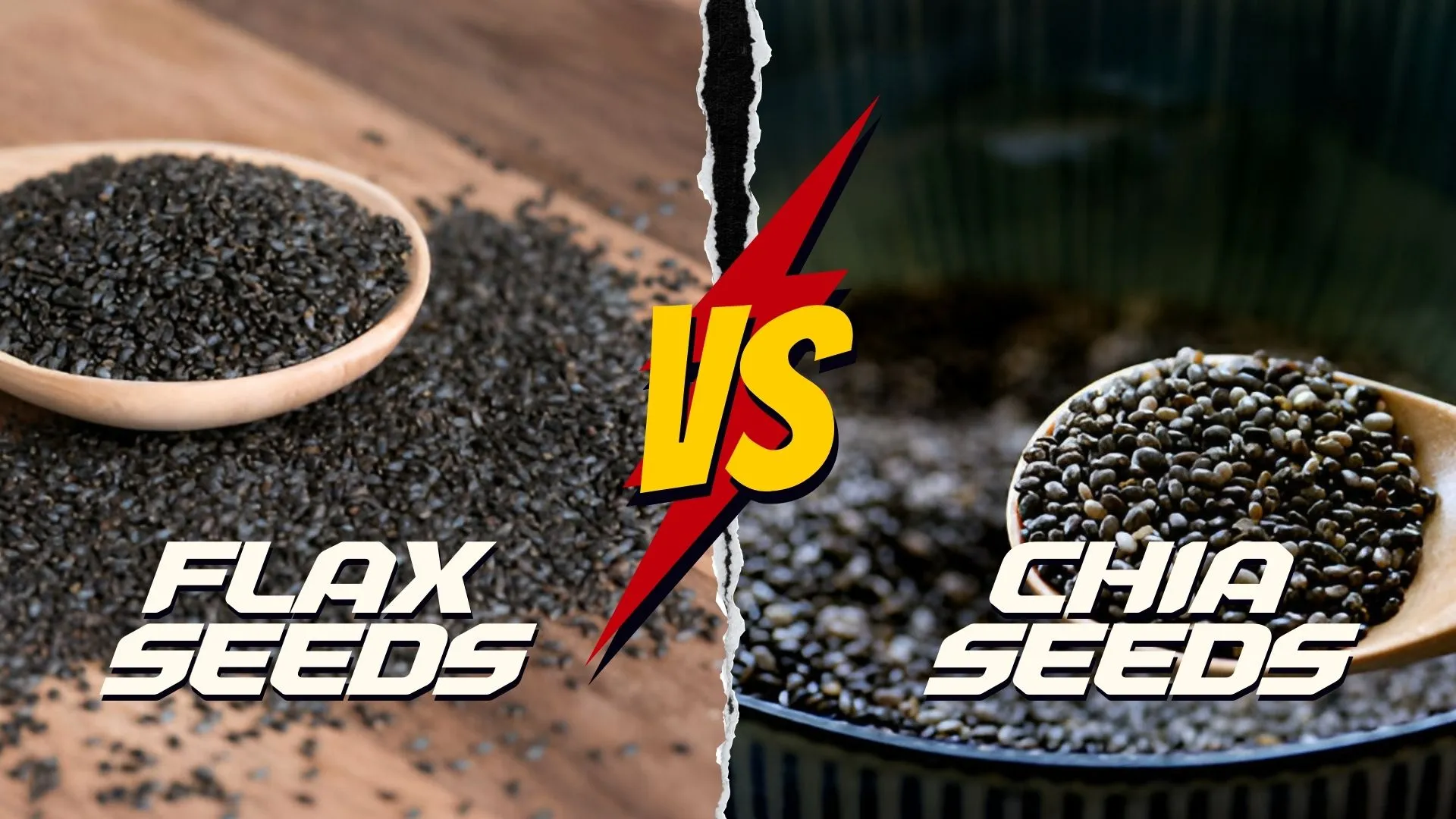
You can easily tell these seeds apart by looking at them. Basil seeds are smaller, more oval-pointed and pitch-black with a matte finish. Studies under a microscope show their surface is porous.
Chia seeds are a bit larger and rounder, and come in a mix of black, gray, brown and white. Their smooth, slightly glossy surface sets them apart from basil seeds.
The biggest difference shows up in liquid. Basil seeds react quickly, forming a gel coating in about 5 minutes. They swell up more than chia seeds, creating a see-through gel with a black center still visible. Chia seeds take longer, about 15-20 minutes, to reach their gel-like texture, and they can soak up about 10-12 times their weight in water.
Basil Seeds vs Chia Seeds: Calories & Macros
The two seeds look similar, but their nutrition is a little different. Knowing these differences helps you choose the right one for your diet.
Calorie Content Comparison
A tablespoon (about 13 grams) of basil seeds contains about 60 calories, and a tablespoon of chia seeds has almost the same. Per 100 grams, basil seeds provide about 473 calories, while chia seeds contain about 486 calories. So neither seed is truly “low calorie”; the difference is small.
Protein and Fiber Analysis
Per tablespoon, both seeds give about 2 grams of protein, but chia seeds have a little more protein overall. Both are rich in fiber. Basil seeds give about 7 grams of fiber per tablespoon, mostly soluble fiber and pectin. Chia seeds provide about 5 grams of fiber per tablespoon.
Essential Fats and Minerals
Omega-3 is where chia seeds clearly lead. One tablespoon of basil seeds contains about 1,240 mg of alpha-linolenic acid (ALA), which is already a good plant-based omega-3 source. Chia seeds give roughly 2,000 mg or more in the same amount.
Both seeds also add minerals. Per tablespoon serving:
- Basil Seeds
- Calcium: 15% of RDI
- Iron: 10% of RDI
- Magnesium: 10% of RDI
- Chia Seeds
- Calcium: 8% of RDI
- Iron: 9% of RDI
- Magnesium: 8% of RDI
Basil seeds have nearly double the calcium of chia seeds. So while these seeds look alike, each brings its own benefits to your diet.
Fiber Content & Satiety
Fiber is the main reason both seeds help with weight management. Basil seeds deliver about 7 grams of fiber in one tablespoon, which is around a quarter of your daily needs. Most of it is soluble fiber, mainly pectin. Chia seeds provide about 5 grams of fiber per tablespoon. Both are easy ways to boost your daily fiber intake.
The fiber in these seeds makes you feel full in slightly different ways. The pectin in basil seeds slows down how fast your stomach empties, which helps you feel full. Chia seeds form a thick gel when they absorb water, which keeps you satisfied for longer.
Basil seeds absorb water faster and expand quickly, so you feel full sooner. Chia seeds soak up about 10-12 times their weight in water and form a thicker gel that keeps you full for longer.
These fiber-rich seeds also help in other ways:
- Your digestive system stays healthy and regular
- Your blood sugar stays more balanced after meals
- Digestion slows down, so energy is released gradually
The high fiber content may take some getting used to. Start with a small amount and increase slowly so your gut can adjust. Always soak both seeds well, so they form their gel before you eat them.
Because fiber keeps you full, it can help you eat fewer calories overall, which supports weight management. Most people do not get enough fiber in their daily diet, so these seeds are an easy way to add more.
Omega-3 Fatty Acids & Heart Health
Omega-3 fats are one of the biggest differences between these two seeds.
Chia seeds lead with about 17.8 grams of alpha-linolenic acid (ALA) per 100 grams. Basil seeds have less, but a single tablespoon still gives you about 1,240 mg of ALA, which covers a good part of an adult’s daily needs.
Omega-3 fats have anti-inflammatory properties. Lower inflammation is linked with better heart and metabolic health, which matters for people dealing with weight-related health issues.
Basil seeds also contain polyphenols that act as antioxidants and may support healthy cholesterol levels. Together with their omega-3s, these compounds support your heart.
Studies suggest chia seeds’ omega-3 content may also help with:
- Reducing liver fat accumulation
- Stabilizing blood sugar levels
- Improving insulin sensitivity
If heart health is your main goal, chia seeds may be the better choice since they contain more omega-3 than basil seeds.
Each seed supports heart health differently. Chia seeds stand out for omega-3s, while basil seeds make up for their lower omega-3 content with antioxidants and calcium. Both are good additions to a heart-healthy diet.
Protein Content & Muscle Health
Protein is another area where the seeds differ. Chia seeds have about 16-17 grams of protein per 100 grams and contain all nine essential amino acids, so their protein is considered complete. Basil seeds contain less protein and do not match chia seeds’ amino acid profile.
Chia seeds’ complete protein makes them a good choice when you want to keep your muscle during weight loss.
Basil seeds still add some plant protein to your diet and are a good protein source for vegetarians when eaten with other protein foods.
Protein helps keep your muscle mass when you are cutting calories, and it also helps you feel full for longer.
If you care about muscle health, chia seeds have clear benefits. Their amino acids help with:
- Muscle repair after exercise
- Tissue repair
- Protein synthesis
Keeping lean muscle is important for a healthy metabolism. This makes chia seeds a good fit if you combine weight loss with strength training. Keep in mind that one tablespoon of either seed only adds about 2 grams of protein, so they should support, not replace, your main protein sources.
Basil Seeds vs Chia Seeds: Which Is Better for Weight Loss?
Basil and chia seeds help with weight loss in slightly different ways. Both work best when combined with a proper diet.
How Basil Seeds Help You Lose Weight
Basil seeds contain pectin, which slows down digestion and helps you feel full. They expand in water within about 5 minutes, creating a gel that helps you feel satisfied quickly.
A teaspoon of basil seeds has about 20 calories, and once soaked it takes up a lot of space in your stomach. This makes a glass of tukh malanga water or sharbat a filling, low-calorie drink when made without much sugar.
Early studies suggest basil seeds may help control blood sugar levels, which can help reduce cravings. More human research is still needed.
How Chia Seeds Help You Lose Weight
Chia seeds show promising results for weight loss. A study of people with type 2 diabetes found that those who ate chia seeds lost 1.9 kg on average, while the control group lost just 0.3 kg. Their waist size also went down.
These seeds work in several ways:
- They absorb about 10-12 times their weight in water to form a thick gel
- They keep blood sugar steady to prevent cravings
- They help maintain muscle while you lose weight
Research shows chia seeds work best when you also eat fewer calories overall. Reviews found people lost more weight when they combined chia seeds with a calorie-controlled diet, and the seeds alone did not help much when people did not change their diet.
Both seeds can help you lose weight, but they work best as part of a balanced, calorie-controlled diet.
Scientific Evidence and Studies
Here is a quick look at what research says about these seeds so far.
Research on Basil Seeds
Lab tests show basil seed oil contains good amounts of plant sterols and natural vitamin E (tocopherols), with antioxidant levels that compare well with flax and perilla seeds.
Lab studies also suggest basil seeds have antibacterial properties. In one animal study, basil seed extract helped diabetic rats lose weight and lower blood sugar. These results are promising, but human studies are still limited.
Studies Supporting Chia Seeds
Research on chia seeds has produced mixed results. Higher intake of plant omega-3s, like those in chia seeds, has been linked with better heart health. However, a study of 90 overweight adults who ate 25 grams of chia seeds daily showed no major changes in their weight or body composition.
The results seem to depend on a person’s starting health. In one 12-week study, obese participants lost more weight (about 1.6 kg) than overweight participants.
Clinical Trial Results
An analysis of 424 participants across several studies found these changes with chia seeds:
- Systolic blood pressure decreased by 3.27 mmHg
- Waist circumference reduced by 2.82 cm
- C-reactive protein (an inflammation marker) dropped by 1.18 mg/L
Both seeds show promising potential, but they work best as part of a complete diet plan. Researchers say larger and longer studies are needed to confirm long-term effects and the right amount to eat.
Best Practices for Using Basil Seeds and Chia Seeds
How you eat and store these seeds makes a big difference. These tips will help you get the most out of them.
Best Time to Consume
Many people like to take these seeds in the morning or before a meal, so they feel full and eat less. Soak basil seeds in water for about 15 minutes before eating. Chia seeds are flexible and can be added to breakfast, a mid-day drink or an evening snack.
It is best not to eat either seed right before bed, so your digestion stays comfortable.
Recommended Daily Dosage
For most adults, about one tablespoon (12-15 grams) of chia seeds a day is enough. For basil seeds, one to two teaspoons soaked in water is a good daily amount.
To prepare them right:
- Basil Seeds: Mix about 1 cup (8 ounces) of water with each tablespoon and wait 15 minutes for them to expand
- Chia Seeds: Let them soak for about 20 minutes until they turn gel-like
Storage and Shelf Life
Stored well, both seeds last a long time because of their natural antioxidants. Kept in airtight containers away from moisture and sunlight, both usually stay fresh for one to two years. Always check the best-before date on the pack.
Keep these storage tips in mind:
- Keep them in a cool, dry place
- Use containers that seal tight to keep moisture out
- Store them away from foods with strong smells
- Your fridge might be best if you live somewhere humid
Both seeds fit easily into different foods. Basil seeds mix well with drinks like sharbat, lemonade and falooda. Chia seeds taste great in smoothies, yogurt, overnight oats and baked goods. This makes it easy to add them to your daily meals.
Comparison Table
| Characteristic | Basil Seeds | Chia Seeds |
|---|---|---|
| Calories (per tbsp) | About 60 | About 60 |
| Calories (per 100g) | About 473 | About 486 |
| Protein (per tbsp) | About 2g | About 2g (complete protein) |
| Fiber (per tbsp) | About 7g | About 5g |
| Omega-3 ALA (per tbsp) | About 1,240 mg | About 2,000 mg or more |
| Calcium (% RDI per tbsp) | 15% | 8% |
| Iron (% RDI per tbsp) | 10% | 9% |
| Magnesium (% RDI per tbsp) | 10% | 8% |
| Gel Formation Time | About 5 minutes | 15-20 minutes |
| Recommended Daily Intake | 1-2 teaspoons | About 1 tablespoon |
| Storage Life | 1-2 years (airtight) | 1-2 years (airtight) |
| Key Weight Loss Benefits | – Swells very quickly – More fiber per spoon – Pectin helps you feel full – Easy to use in summer drinks | – Complete protein – More omega-3 – Thicker, longer-lasting gel – Helps keep blood sugar steady |
Conclusion
Basil and chia seeds each bring something useful to weight management. Calories are almost the same per spoon, so the real difference is in how they work. Chia seeds offer complete protein and more omega-3, which helps you keep muscle during weight loss. Basil seeds give more fiber per spoon and swell faster, which makes you feel full right away.
Chia seeds are good at keeping blood sugar steady and keeping you full longer. Basil seeds are great at curbing hunger quickly because they expand fast. Chia seeds suit active lifestyles that need a little extra protein, while basil seeds are perfect in light, refreshing drinks.
Your goals will guide which seed works better for you. Choose chia seeds if you want to keep muscle and get more omega-3. Choose basil seeds if you want quick fullness and help with portion control. Many people simply use both.
Neither seed is a miracle solution. They work best as part of a balanced diet with regular activity. Shop Premium Dry Fruits Online – fresh, hand-checked and delivered to your doorstep.
Shop Premium Seeds Now!
Enjoy the best pumpkin seeds price in Pakistan, coriander seeds price in Pakistan and chia seeds in Pakistan with great freshness and quality. Dry Fruits Mart offers premium quality at fair rates. Order now!
FAQs About Basil Seeds vs Chia Seeds
Which is better, chia seeds or basil seeds?
Neither is better for everyone. Chia seeds are better for omega-3s and protein, while basil seeds give more fiber per spoon and swell faster in water, which helps with quick fullness and hydration.
Which seed is more effective for weight loss: basil or chia?
Both can help. Calories are about the same per tablespoon. Chia seeds offer more protein and omega-3, which support muscle and metabolic health, while basil seeds swell quickly and help you feel full sooner. Choose based on your goals and taste.
How do basil seeds help with weight loss?
Basil seeds are high in soluble fiber and expand quickly in water, which helps you feel full and eat less. They may also help keep blood sugar steady. They work best with a balanced, calorie-controlled diet.
Can chia seeds help reduce belly fat?
Chia seeds cannot target belly fat on their own, but they can support overall weight loss as part of a balanced diet. Some studies have seen a small drop in waist size, but results vary from person to person.
What is the recommended daily intake for basil and chia seeds?
For basil seeds, 1-2 teaspoons soaked in water is a good daily amount. For chia seeds, about one tablespoon a day is enough for most adults. Start with smaller amounts and increase slowly to avoid digestive discomfort.
How should these seeds be eaten for the best results?
Always soak them first: basil seeds for about 15 minutes and chia seeds for about 20 minutes. Add them to water, sharbat, yogurt, oats or smoothies, ideally in the morning or before a meal. Combine them with a balanced diet and regular exercise.
About the Author: Sharjeel Yaseen