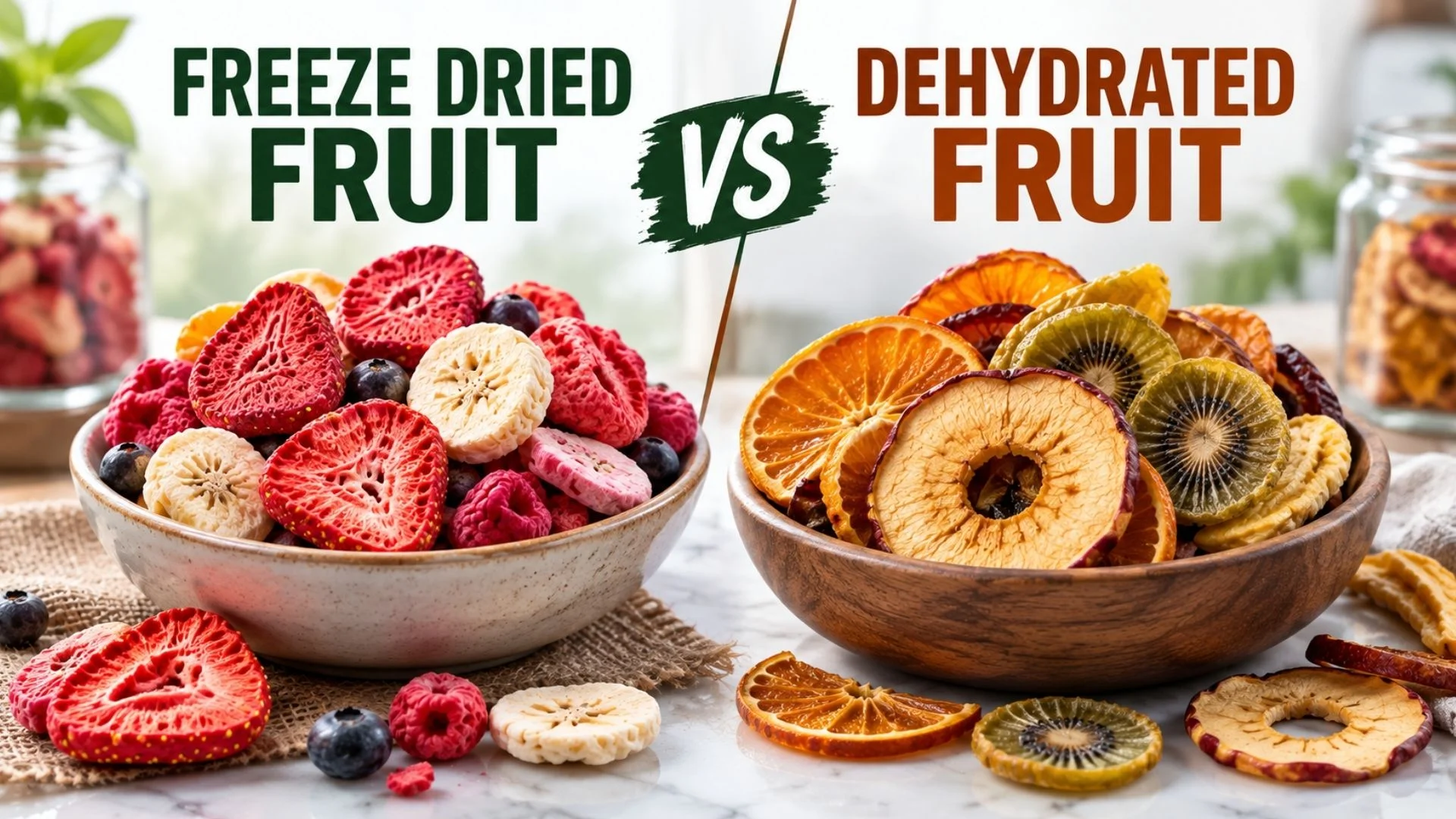
Freeze dried fruit vs dehydrated fruit might look like similar snacks, but the differences run deeper than you’d think. Freeze drying removes all moisture nearly and creates a light, crispy texture. It retains all original nutrients almost. Dehydrated fruit keeps about a third of its water content and results in a chewy, dense bite. So, is freeze dried fruit better than dehydrated? We’re breaking down everything you need to know about freeze dried vs dehydrated fruit. From nutrition and shelf life to taste and best uses, this guide will help you make the right choice for your pantry.
What is Freeze Dried Fruit vs Dehydrated Fruit?
Both methods remove moisture from fruit, but freeze dried vs dehydrated fruit starts with fundamentally different processes that determine everything from texture to nutritional content.
The Freeze Drying Process
Freeze drying, also called lyophilization, uses a three-phase approach that never exposes fruit to high heat. The process begins by freezing fruit at very low temperatures between -30 to -50°F. This stabilizes the cellular structure and prevents nutrient degradation.
The fruit enters a vacuum chamber for primary drying once frozen solid. Pressure drops by a lot while gentle heat is applied, causing frozen water to sublimate. Ice transforms directly into vapor without passing through a liquid state. Sublimation removes up to 95% of the water content during this phase. The vacuum speeds this process while a cold condenser captures water vapor.
The final phase, secondary drying, removes the remaining moisture bound to the fruit at a molecular level. Temperatures rise slightly higher than primary drying to break bonds between water molecules and the fruit structure. Freeze dried fruit ends up with only 1-4% residual moisture, compared to fresh fruit which contains 80-95% water. The porous structure left behind allows immediate rehydration when water is added.
The Dehydration Process
Dehydration takes a simpler route by using heat and airflow to evaporate moisture. Food dehydrators, ovens, or even sun drying can remove water from fruit through this method. The process applies steady temperatures, typically 135°F for most fruits. Some varieties like lemons and limes require lower heat at 115°F to prevent browning.
Warm air circulates around thinly sliced fruit and draws moisture out over several hours. Dehydration time varies based on fruit thickness, moisture content, and equipment used. Freeze drying operates in a controlled vacuum environment at much lower temperatures.
The heat exposure removes 90-95% of water content and leaves dehydrated fruit with 5-20% residual moisture. This creates the characteristic chewy, leathery texture you find in most dried fruit snacks.
Processing Differences
The core difference between freeze dried fruit vs dehydrated fruit lies in temperature and moisture removal. Freeze drying removes up to 99% of moisture at sub-zero temperatures. Dehydration removes about 90-95% using heat between 115-145°F.
Freeze drying preserves the original shape and structure because ice crystals sublimate without damaging cell walls. Dehydration causes fruit to shrink and change texture as heat evaporates liquid water. Keep in mind that freeze drying requires specialized vacuum equipment, making it more complex and energy-intensive than heat-based dehydration.
Freeze Dried vs Dehydrated Fruit: Nutritional Comparison
Temperature makes all the difference when you preserve nutrients. Freeze drying retains 90 to 97% of vitamins through its cold process at -40°C to -80°C, while dehydration preserves only 60-75% using heat between 40-70°C. That temperature gap explains why freeze dried vs dehydrated fruit delivers such different nutritional profiles.
Vitamin and Mineral Retention
Heat-sensitive vitamins take the biggest hit during dehydration. Vitamin C faces severe losses, dropping by up to 50% according to the Journal of Food Engineering. B vitamins, including B1 and B9, begin breaking down at temperatures above 60°C. Dehydration also destroys dietary enzymes beyond 42°C.
Freeze drying maintains preservation of antioxidants and dietary enzymes almost completely because temperatures never rise above freezing. The cellular structure remains intact and keeps minerals bioavailable. Molecules stay dormant at -40°C and nothing degrades.
Minerals behave differently. Both methods preserve potassium, iron and other minerals since they remain heat-stable. The difference shows up in heat-sensitive compounds where freeze drying maintains 80-90% of vitamin C compared to just 30-50% in dehydrated versions.
Calorie and Sugar Content
Neither method adds calories or sugar to fruit. Water removal concentrates everything, including natural sugars, fiber and vitamins. A cup of fresh strawberries contains roughly the same total sugar as the dried equivalent from that cup, just without the water weight.
Freeze dried fruit delivers fewer calories by volume because its light, airy texture means less actual fruit fits in a measuring cup. Both options contain calories similar by weight since you’re eating the same fruit minus water. The concentration effect makes portion control vital, as freeze dried fruit removes 95-99% of water compared to 80% for dehydration.
Fiber and Antioxidant Levels
Fiber survives both processes intact as a structural component unaffected by heat or cold. Freeze dried fruits contain up to 2 grams of fiber per 10-gram serving, similar to dehydrated versions.
Antioxidant preservation tells a different story. Freeze drying maintains high levels of polyphenols and anthocyanins, while heat reduces these compounds in dehydrated fruit. Studies on tropical fruits found freeze drying preserved total antioxidant capacity with minimal effect on phenolic content.
Overall Nutritional Value
Freeze dried fruit edges ahead nutritionally by preserving more heat-sensitive vitamins and antioxidants. Dehydrated fruit still provides fiber and minerals, which makes it nutritious despite vitamin losses of 25-40% during processing. Both concentrate natural sugars and require mindful portions to avoid excess calorie intake.
Taste, Texture and Shelf Life Differences
Sensory differences between these preservation methods become obvious the moment you taste them. Freeze dried fruit delivers a more natural flavor profile because the low-temperature process locks in original aromas and taste compounds. Heat is absent, so flavor molecules remain unchanged and create an intense yet authentic fruit experience.
Flavor Intensity and Sweetness
Freeze dried fruit tastes exactly like fresh fruit, just more concentrated. This intensity comes from removing water while preserving the complete flavor matrix. Dehydrated fruit, however, develops a different sweetness profile. Heat concentrates natural sugars during processing and creates a caramelized, deeper sweetness. Fresh apple contains 10 grams of sugar per 100 grams, while dried apple jumps to 57 grams per 100 grams. The drying process doesn’t add sugar but removes water and makes existing sugars more prominent.
Texture and Crunch Factor
Texture differences define these products. Freeze dried fruit maintains a light, airy, crispy texture that shatters when bitten. Microscopic air pockets form during sublimation and create the distinctive crunch. Dehydrated fruit becomes chewy or leathery as heat shrinks the fruit and moisture evaporates. The chewiness results from incomplete water removal and structural collapse during heat exposure.
Moisture Content and Storage Life
Moisture levels affect longevity. Freeze drying removes 98-99% of water content and leaves just 1-5% residual moisture. This extreme dryness allows freeze dried fruit to last 15-25 years when stored in airtight containers. Dehydrated fruit removes 90-95% of moisture and retains 5-20% water content. Then shelf life drops to 6 months to 5 years depending on storage conditions. Industrial dehydration extends this to 15 years maximum, but rarely matches freeze dried longevity.
Rehydration Capabilities
Freeze dried fruit rehydrates faster in 2-10 minutes by adding water. The preserved cellular structure acts like a sponge and absorbs liquid quickly while regaining 95% of original volume. Dehydrated fruit requires cooking and 20+ minutes to rehydrate. Heat damaged the cell structure during processing, so water absorption occurs slowly and incompletely. This leaves fruit flattened and rubbery.
Best Uses for Freeze Dried and Dehydrated Fruit
You start cooking and the difference between freeze dried vs dehydrated fruit becomes practical. Each type excels in different kitchen scenarios based on moisture content and texture.
Freeze Dried Fruit Applications
The crispy, airy texture makes freeze dried fruit perfect to snack on straight from the package. Kids enjoy the chip-like crunch while getting actual fruit servings without added sugar. Gym bags and desk drawers benefit from freeze dried options since they won’t bruise, leak, or spoil.
Smoothie enthusiasts blend freeze dried berries instead of ice cubes. This adds intense fruit taste and thickness without diluting drinks. Fresh berries spoil quickly, but freeze dried versions sit ready in your pantry year-round. Athletes value knowing how to precisely control portions and track macros.
Premium cereals and granolas contain freeze dried fruit pieces because they stay crunchy until milk is added. The delayed rehydration creates a better eating experience than traditionally dried fruit, which becomes chewy immediately. Sprinkle freeze dried blueberries over oatmeal or cottage cheese to get natural sweetness without mushiness.
Freeze dried fruit shines in baking applications since it adds flavor without extra moisture that would alter batter consistency. Fresh strawberries make cookies soggy, but freeze dried strawberries integrate smoothly while maintaining classic texture. Pulverize any freeze dried fruit into powder that folds into cake batter, whipped cream, buttercream frosting, and meringues. To name just one example, strawberry powder creates natural pink hues without food coloring.
Backpackers rely on freeze dried ingredients to get lightweight meals. A few ounces of freeze dried dinner becomes a full plate with just hot water. The weight savings matter when carrying everything on your back. Emergency preparedness kits use similar technology to store nutritious food lasting years without refrigeration.
Dehydrated Fruit Applications
Dehydrated fruit dominates baking recipes where chewy texture adds value. Dried cranberries, raisins, and chopped apricots hold their shape during baking while contributing concentrated sweetness. The low moisture content prevents excess wetness in batters and doughs. Brief rehydration of dried fruits before folding into batter creates plumper pieces while keeping moisture controlled.
Trail mixes combine dehydrated fruit with nuts to get portable energy. The natural sugar content provides quick fuel while fiber contributes to satiety. Create banana split trail mix to pack in lunchboxes, after-school snacks, and hiking trips.
Reconstituted dehydrated fruit works well in cooked applications like simmered compotes and fruit sauces. One cup of dried fruit yields roughly 1.5 cups reconstituted. The soaking liquid retains nutrients and flavor, and can substitute other recipe liquids.
Which Type Should You Buy?
Your pantry needs determine which option makes sense. Budget and storage goals factor into the freeze dried fruit vs dehydrated fruit decision. At Dry Fruits Mart, we offer a wide selection of premium dehydrated fruits, carefully sourced and hygienically packed to ensure freshness, flavor, and quality.
When to Choose Freeze Dried Fruit
Prioritize freeze dried options when nutrient preservation matters most. The cold processing maintains 97% of original vitamins and makes it nearly similar to fresh fruit nutritionally. Long-term storage applications benefit from the 25-year shelf life that freeze drying provides. Emergency preparedness kits and backpacking supplies rely on this longevity without refrigeration.
Baking enthusiasts gain control over moisture content since freeze dried fruit adds intense flavor without introducing extra liquid that would alter batter consistency. The crispy texture also works better for breakfast cereals and yogurt toppings where immediate sogginess ruins the experience.
👉 Shop Premium Mix Freeze Dried Fruits Now: https://dryfruitsmart.pk/product/freeze-mix-dried-fruits/
When to Choose Dehydrated Fruit
Budget constraints make dehydrated fruit the practical choice. Freeze dried products cost about five times more than their dehydrated counterparts. Specific pricing shows dehydrated strawberries at roughly $3 per ounce versus $15 per ounce for freeze dried versions.
Traditional baking recipes calling for raisins, dried cranberries, or apricots work well with dehydrated options. The chewy texture integrates well into trail mixes and granola bars. Cooked compotes also benefit since rehydration occurs naturally during preparation.
👉 Shop Premium Dehyderated Fruits Now: https://dryfruitsmart.pk/collection/dehydrated-fruits/
Cost and Availability Factors
Dehydrated fruit dominates grocery store shelves and remains accessible to more people at various price points. Freeze dried selections require specialty retailers or online ordering. This limits spontaneous purchases. The specialized vacuum equipment needed for freeze drying drives up production costs. Heat-based dehydration uses simpler and less expensive technology.
Making Your Decision
Match the product to your specific application. Quick energy for outdoor activities works similarly with either type. Portion control remains vital since both concentrate calories and sugars. Nutrition guidelines suggest you consume no more than half the volume you’d eat of fresh fruit. A half-cup serving prevents overconsumption of these nutrient-dense foods.
Comparison Table: Freeze Dried Fruit vs Dehydrated Fruit
| Attribute | Freeze Dried Fruit | Dehydrated Fruit |
|---|---|---|
| Processing Method | Lyophilization using freezing and vacuum sublimation | Heat and airflow evaporation |
| Processing Temperature | -30°F to -50°F (-40°C to -80°C) | 115°F to 145°F (40°C to 70°C) |
| Moisture Removal | 95-99% | 90-95% |
| Residual Moisture Content | 1-5% | 5-20% |
| Texture | Light, airy, crispy (shatters when bitten) | Chewy, leathery, dense |
| Vitamin Retention | 90-97% of vitamins preserved | 60-75% of vitamins preserved |
| Vitamin C Retention | 80-90% | 30-50% |
| Antioxidant Preservation | High levels managed to keep (minimal effect on phenolic content) | Reduced by heat exposure |
| Fiber Content | Up to 2 grams per 10-gram serving | Up to 2 grams per 10-gram serving (similar) |
| Mineral Preservation | Preserved | Preserved |
| Flavor Profile | Intense, authentic, exactly like fresh fruit | Caramelized, deeper sweetness due to heat |
| Shelf Life | 15-25 years (when stored right) | 6 months to 5 years (up to 15 years industrial) |
| Rehydration Time | 2-10 minutes | 20+ minutes (requires cooking) |
| Rehydration Quality | Regains 95% of original volume, sponge-like absorption | Slow, incomplete, leaves fruit flattened and rubbery |
| Relative Cost | About 5 times more expensive (~$15 per ounce for strawberries) | More affordable (~$3 per ounce for strawberries) |
| Availability | Specialty retailers or online ordering | Accessible to more people in grocery stores |
| Best Uses | Snacking, smoothies, cereals, baking (moisture control), backpacking and emergency kits | Trail mixes, traditional baking, cooked compotes and fruit sauces |
| Calorie Content (by weight) | As with dehydrated (concentrated) | As with freeze dried (concentrated) |
| Calorie Content (by volume) | Fewer calories due to airy texture | More calories per volume due to density |
Conclusion
The freeze dried vs dehydrated fruit debate boils down to your specific needs. Freeze dried fruit wins on nutrition and shelf life, but you’ll pay substantially more for these benefits. Dehydrated fruit delivers solid nutrition at budget-friendly prices and works well for traditional baking and trail mixes.
Here’s how I’d make the call:
Choose freeze dried for maximum nutrient retention, long-term storage, and crispy snacking.
Choose dehydrated for everyday baking, trail mixes, and cost savings.
Both options concentrate natural sugars, so portion control matters. Half the volume of fresh fruit makes a good serving size for either type.
FAQs
Q1. Which is healthier: freeze-dried or dehydrated fruit?
Freeze-dried fruit is generally healthier as it retains 90-97% of its original nutrients, including vitamins, minerals, and antioxidants. Dehydrated fruit preserves only about 60-75% of nutrients due to heat exposure during processing. Both options provide fiber and concentrated natural sugars, but freeze-dried varieties maintain significantly more vitamin C and heat-sensitive compounds.
Q2. Does freeze-dried fruit retain the same nutritional value as fresh fruit?
Yes, freeze-dried fruit maintains approximately 97% of the nutrients found in fresh fruit. The low-temperature vacuum process preserves vitamins, minerals, and antioxidants with minimal degradation. When rehydrated, freeze-dried fruit closely resembles the nutritional profile of its fresh counterpart, making it one of the most effective preservation methods available.
Q3. What are the main disadvantages of eating freeze-dried fruit?
The primary drawbacks include higher cost (approximately five times more expensive than dehydrated options), limited availability in regular grocery stores, and loss of the hydrating benefits that fresh fruit provides. Additionally, the concentrated nature of freeze-dried fruit makes portion control important to avoid consuming excess calories and natural sugars.
Q4. How does the shelf life compare between freeze-dried and dehydrated fruit?
Freeze-dried fruit has a significantly longer shelf life of 15-25 years when properly stored in airtight containers, thanks to its 1-5% residual moisture content. Dehydrated fruit typically lasts 6 months to 5 years due to higher moisture retention (5-20%), though industrial dehydration can extend this to a maximum of 15 years.
Q5. Can freeze-dried and dehydrated fruits be used interchangeably in recipes?
Not always. Freeze-dried fruit works best for applications requiring crispness and minimal moisture, such as cereals, smoothies, and baking where texture control matters. Dehydrated fruit is better suited for traditional baking, trail mixes, and cooked dishes where its chewy texture and ability to absorb liquid during cooking are advantageous.
About the Author: Sharjeel Yaseen