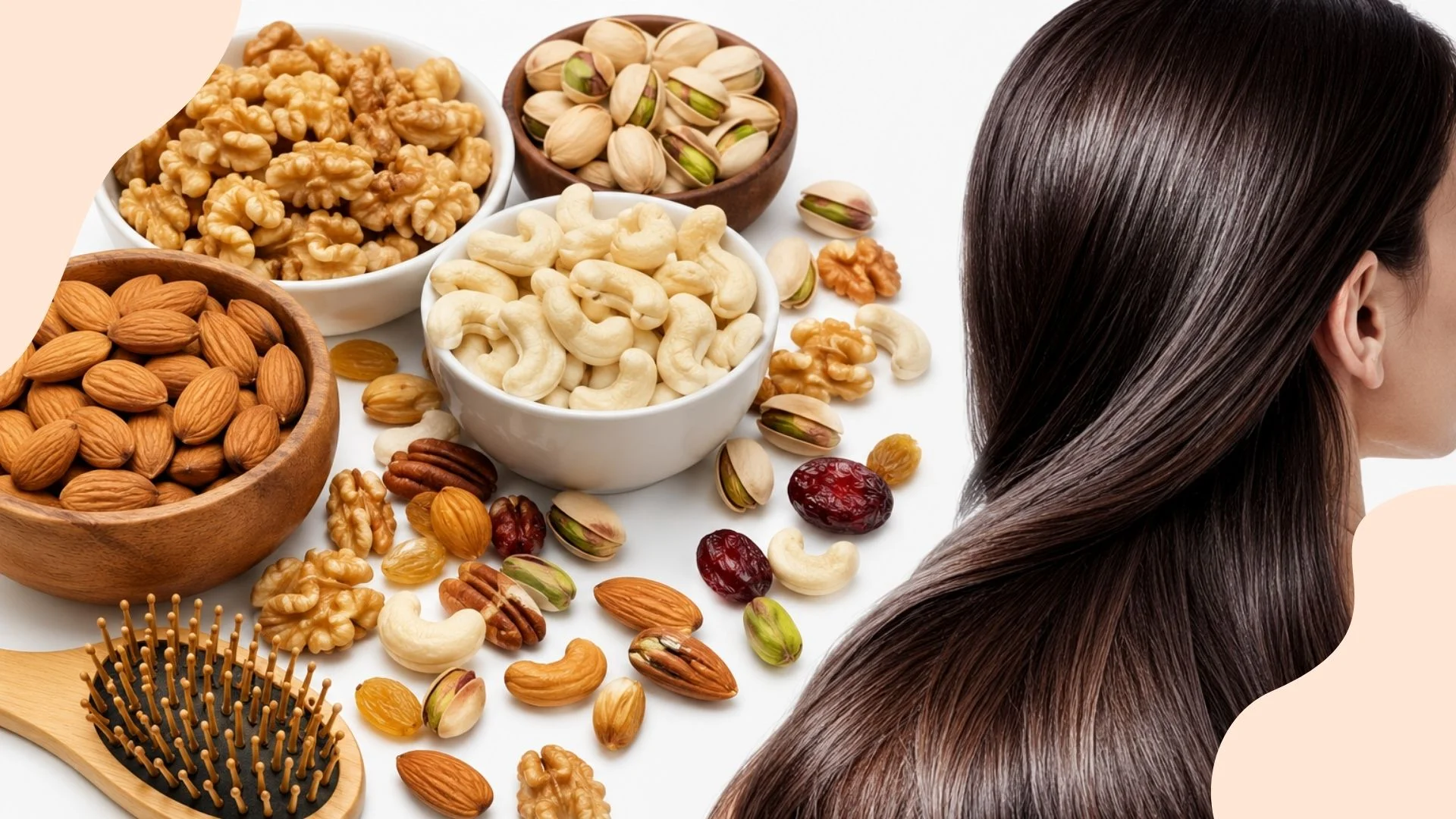
Hair loss is a common problem. Stress, poor nutrition, pollution, or hormonal imbalance often cause it. We’ve all been there, watching strands fall and wondering what actually works.
The good news? The best dry fruits for hair growth are nutritional powerhouses packed with biotin, omega-3s, iron, zinc, and antioxidants. This piece walks you through 12 dry fruits that promote hair growth and thickness. We’ll also cover the best time to eat dry fruits for hair growth and the best dry fruits for fast hair growth. Let’s get into it.
Why Dry Fruits Work for Hair Growth: The 5 Key Nutrients Explained
Dry fruits deliver targeted nutrition that addresses the mechanisms of poor hair health. These nutrients explain why the best dry fruits for hair growth work at a cellular level.
Biotin (Vitamin B) – The Keratin Production Trigger
Biotin activates enzymes responsible for keratin synthesis, the protein that forms your hair’s structure. Hair production slows down without adequate biotin and results in thinning and breakage. Almonds and pistachios are among the best dry fruits for hair growth and thickness because of their biotin content. The vitamin strengthens the hair shaft from within and reduces brittleness.
Iron – The Anemia-Hair Loss Connection Most Pakistanis Miss
Anemia results from iron deficiency and restricts oxygen delivery to hair follicles. Starved follicles enter a resting phase too early and trigger hair fall. Raisins and dried apricots curb this by boosting hemoglobin levels. Women especially benefit when you have menstruation that increases deficiency risk, so iron-rich dry fruits are a great way to get this mineral.
Zinc – Scalp Oil Regulation and Follicle Repair
Zinc maintains oil glands around hair follicles and supports tissue repair. Scalp dryness, dandruff, and weakened roots result from a zinc shortage. Cashews provide this mineral and regulate sebum production while strengthening follicle structure. Zinc also blocks DHT, a hormone connected to male pattern baldness.
Omega-3 Fatty Acids – Scalp Hydration and Anti-Inflammation
Omega-3s reduce scalp inflammation that disrupts hair growth cycles. These fatty acids nourish follicles and improve elasticity while preventing dryness. Walnuts stand out as the best dry fruits for fast hair growth because of their omega-3 concentration. They create an optimal scalp environment for sustained growth.
Vitamin E – Antioxidant Protection for Hair Follicles
Vitamin E neutralizes free radicals that damage follicle cells and cause premature aging. The antioxidant improves blood circulation to the scalp and ensures nutrients reach hair roots. Hazelnuts and almonds offer concentrated vitamin E and protect hair from environmental stress. The best time to eat dry fruits for hair growth is morning, at the time absorption rates peak.
List of 12 Best Dry Fruits for Hair Growth (List)
Now that we understand the science behind hair nutrition, let me walk you through the 12 best dry fruits for hair growth that deliver these nutrients most effectively. Each offers unique benefits backed by specific nutritional profiles.
The selection below covers the best dry fruits for hair growth and thickness. It addresses different hair concerns from breakage to thinning. Some provide quick results, while others work to rebuild follicle strength over time.
Here’s the complete line-up:
- Almonds – Biotin and vitamin E concentration strengthens roots and reduces breakage
- Walnuts – Omega-3 fatty acids nourish follicles and improve hair elasticity
- Cashews – Zinc and iron content supports keratin production and oxygen delivery
- Pistachios – Biotin boost prevents dryness and promotes scalp circulation
- Raisins – Iron-rich profile enhances blood flow to hair follicles
- Dates – Amino acids and iron create fuller, thicker hair strands
- Figs (Anjeer) – Antioxidants curb scalp inflammation and free radical damage
- Brazil Nuts – Selenium protects follicles and supports scalp health
- Dried Apricots – Vitamin A nourishes hair from root to tip
- Prunes – Copper and iron strengthen hair structure and prevent thinning
- Hazelnuts – Vitamin E concentration improves scalp circulation
- Pine Nuts – Protein and zinc repair damaged hair tissue
Each of these best dry fruits for fast hair growth targets specific deficiencies. To cite an instance, if anemia causes your hair loss, raisins and dates work fastest. Walnuts address inflammation-related shedding, while Brazil nuts protect against oxidative stress.
The sections ahead break down nutritional profiles and specific benefits. You’ll also find consumption methods for each. You’ll discover which form delivers maximum results and how to combine them for cooperative effects.
1. Almonds: Rich in Biotin and Vitamin E
Almonds rank as one of the best dry fruits for hair growth due to their concentrated biotin and vitamin E levels. A single ounce (28 grams) delivers 48% of your daily vitamin E requirement. This makes them effective for follicle protection.
Key Nutritional Profile
Nutritional data shows that almonds provide 30% of your daily biotin value and 25% of vitamin E needs per serving. They also contain protein, omega-3 fatty acids, magnesium, zinc and iron. The biotin content triggers keratin production, the structural protein that forms hair strands. Vitamin E functions as an antioxidant and shields follicles from oxidative damage that accelerates aging.
Almonds supply 20% of your daily magnesium requirement, a mineral that improves blood circulation to the scalp. The zinc and iron content supports tissue repair and prevents excessive shedding. These address two common mechanisms of hair loss.
Benefits for Hair Growth and Thickness
Biotin strengthens hair and prevents breakage by supporting keratin synthesis. Vitamin E protects hair from free radical damage while improving scalp circulation. Nutrients reach follicles this way. The natural oils in almonds boost hair elasticity and fill gaps in damaged strands. Fatty acids reinforce weak hair. Magnesium deficiency often triggers hair thinning. Almonds are especially valuable for strengthening roots and reducing fall.
How to Consume Almonds for Best Results
Soak 5-10 almonds overnight, peel them in the morning and eat on an empty stomach. This method improves nutrient absorption by softening cell walls and reducing anti-nutrients. Your body can extract maximum biotin and vitamin E. Morning consumption optimizes absorption at the time digestion is most active. To name just one example, eating soaked almonds before breakfast will give the nutrients circulation throughout the day. This supports continuous follicle nourishment.
Explore our Premium Almonds Online in Pakistan
2. Walnuts: Omega-3 Powerhouse for Hair
Walnuts contain the highest omega-3 concentration of any tree nut. They deliver 2.5 grams of alpha-linolenic acid (ALA) per 28-gram serving. This makes them the best dry fruits for rapid hair growth when scalp inflammation disrupts follicle function.
Key Nutritional Profile
A 28-gram portion provides 2.5 grams of omega-3 fatty acids, along with biotin, selenium, vitamin E and zinc. The copper content supports melanin production and maintains natural hair color. Potassium helps cell regeneration and growth cycles. The omega-3 profile has omega-6 and omega-9 fatty acids. This creates a complete spectrum that nourishes hair from follicle to tip.
Benefits for Hair Growth and Thickness
Omega-3s calm scalp inflammation and regulate sebum production. These address two major growth inhibitors. Research shows omega-3 supplementation improved hair density by 19% over six months. The fatty acids reduce inflammation around follicles and keep them in the active growth phase longer rather than entering premature shedding. Selenium and vitamin E function as antioxidants. They neutralize free radicals while regulating hormonal fluctuations linked to hair loss. The linoleic and oleic acids improve moisture retention and smooth hair cuticles. This reduces frizz and adds shine. Arginine boosts scalp circulation and delivers nutrients to roots.
How to Consume Walnuts to Get Best Results
Eat 1-2 handfuls of raw walnuts daily. This equals about 7 whole walnuts or 1 ounce. Soaking overnight removes phytic acid and improves biotin and fatty acid absorption. Add chopped walnuts to oatmeal or yogurt, blend into smoothies, or sprinkle over salads. For topical application, massage walnut oil into the scalp 2-3 times weekly. This stimulates blood circulation. Most people notice texture improvements within 4-6 weeks. Major density gains appear after 3-4 months.
Explore & Buy Premium Walnut (Akhrot) Online
3. Cashews: Zinc and Iron for Stronger Hair
Cashews stand out among the best dry fruits for hair growth due to their zinc and iron combination, two minerals often deficient in people experiencing hair thinning. Zinc is one of the more common nutritional causes of hair shedding. This makes cashews especially valuable.
Key Nutritional Profile
One ounce (approximately 15-18 cashews) delivers concentrated zinc, iron, protein, vitamin E, biotin, and healthy fats. The copper content helps melanin production and maintains hair color while preventing premature graying. Protein levels reach approximately 5 grams per serving and provide amino acids needed for keratin formation. The monounsaturated and polyunsaturated fats keep scalp oil balanced.
Benefits for Hair Growth and Thickness
Zinc keeps oil glands surrounding follicles healthy and supports tissue repair. This creates a healthy environment for growth without dandruff or excess sebum interference. Iron carries oxygen to follicle cells. When stores run low, the body diverts resources away from hair and triggers shedding. Copper and zinc deficiency link to premature hair loss. The healthy fats keep hair moisturized and give it a glossy shine, while protein builds stronger strands resistant to breakage.
How to Consume Cashews for Best Results
Consume 5-10 cashews daily. Soaking reduces phytic acid content and enhances zinc and iron absorption. Pair cashews with vitamin C-rich foods like strawberries to increase iron uptake efficiency. Enjoy quality cashews as a convenient snack or add them to your favorite recipes. Browse Cashew Nuts
4. Pistachios: Biotin Boost for Thicker Hair
Pistachios deliver one of the highest biotin concentrations among nuts. A one-ounce serving (about 49 kernels) provides 30 to 35% of your recommended daily value. This positions them as the best dry fruits for hair growth when biotin deficiency causes thinning.
Key Nutritional Profile
A 49-kernel serving contains 6 grams of plant-based protein and supplies amino acids that form hair’s building blocks. This portion offers zinc at 6% of the daily value and vitamin B6 at 20%. The nuts contain L-arginine, an amino acid that improves circulatory health. Monounsaturated and polyunsaturated fatty acids round out the profile with vitamin E.
Benefits for Hair Growth and Thickness
Biotin acts as a coenzyme supporting amino acid metabolism needed for keratin production. This strengthens the hair infrastructure and creates more resilient strands. Zinc functions as a cofactor for enzymes involved in cell division and repair within hair follicles that divide fast. It helps blend keratin while potentially inhibiting the enzyme converting testosterone into DHT, a hormone linked to hair loss. L-arginine serves as a nitric oxide precursor and widens blood vessels to improve microcirculation. This blood flow delivers oxygen and nutrients to follicles more effectively. Vitamin B6 creates hemoglobin and further supports nutrient delivery to the scalp.
How to Consume Pistachios for Best Results
Consume 30 grams daily, which equals one handful. Choose raw or dry-roasted, unsalted varieties to avoid inflammatory effects from high sodium processing. Expect visible results within 8 to 12 weeks with consistent intake.
Discover premium pistachios, perfect for everyday snacking, desserts, and homemade dry-fruit mixes. Discover Premium Pistachios Collection
5. Raisins: Iron-Rich for Scalp Circulation
Iron deficiency ranks as the world’s most common nutritional deficiency and a prominent cause of hair loss. Raisins address this gap directly and make them among the best dry fruits for hair growth when anemia triggers shedding.
Key Nutritional Profile
Dark seedless raisins contain 80% more iron than lighter varieties. A 100-gram serving provides 299 calories, 3.3 grams of protein, 4.5 grams of fiber, and negligible fat. Raisins also supply B vitamins (B6 and inositol in particular), potassium, antioxidants like resveratrol, amino acids, and vitamin C. The iron exists as non-heme iron, which has lower bioavailability than meat-based sources. But the vitamin C content improves absorption rates.
Benefits for Hair Growth and Thickness
Iron functions as a cofactor for ribonucleotide reductase, the enzyme that controls DNA synthesis in rapidly dividing hair follicle cells. Iron supports hemoglobin production, which carries oxygen to follicles and prevents premature shedding. B vitamins support follicle cell health. Resveratrol protects against inflammation-related thinning. The amino acids provide building blocks for keratin synthesis. Treatment goals target ferritin levels above 50 μg/L or 70 μg/ml.
How to Consume Raisins for Best Results
Soak 15-20 black raisins overnight for at least 8 hours. Drink the strained water on an empty stomach in the morning when absorption peaks. Eat the soaked raisins afterward, as soaking improves mineral absorption and reduces digestive stress. Black raisins (Munakka) deliver superior results compared to golden varieties due to higher iron and polyphenol content.
Pick quality raisins for breakfast bowls, trail mixes, desserts, or a simple everyday snack. Find Your Favorite Raisins Online
6. Dates: Amino Acids for Fuller Hair
Amino acids distinguish dates among the best dry fruits for hair growth, as these compounds transport nutrients directly to hair strands while building keratin structure. The protein content, though modest, provides essential amino acids that follicles convert into the hair shaft.
Key Nutritional Profile
Dates deliver iron, B vitamins (biotin B7 and pantothenic acid B5), zinc, vitamin C, protein with amino acids, magnesium, and potassium. The iron content improves blood circulation and oxygen supply to the scalp. Vitamin B complex strengthens hair and maintains healthy follicles. Zinc maintains hair tissue structure and supports sebum production for moisture retention. The water content and natural sugars in dates lock in moisture. This prevents dryness in both scalp and strands.
Benefits for Hair Growth and Thickness
Amino acids boost shine and smooth strands while preventing damage by facilitating nutrient transport to hair. Iron and B vitamins curb nutrient deficiencies that trigger hair fall. Biotin and amino acids strengthen hair and reduce breakage. Antioxidant properties from vitamin C help maintain scalp health and prevent dandruff with dryness. Regular consumption boosts natural shine and softness.
How to Consume Dates for Best Results
Eat 4-6 dates daily as part of your routine. Ajwa and Medjool varieties provide high iron and antioxidant levels. Add dates to smoothies, oatmeal, or salads for variety.
Explore Our Premium & Fresh Dates in Pakistan.
7. Figs (Anjeer): Antioxidants for Scalp Health
Antioxidants position figs (anjeer) among the best dry fruits for hair growth at the time free radical damage weakens follicles and accelerates aging. The phenols, flavonoids, and polyphenols create a protective environment conducive to sustained growth.
Key Nutritional Profile
Figs deliver vitamins A, C, E, and K among other nutrients like iron, calcium, magnesium, and vitamin B6. The omega-3 and omega-6 fatty acid content improves scalp moisture. Fiber helps nutrient absorption. Protein reaches 6.31 grams per 100 grams dried weight. Figs contain potassium, phosphorous, and trace elements including manganese, zinc, and copper.
Benefits for Hair Growth and Thickness
Antioxidants neutralize free radicals that damage follicle cells and reduce breakage. They protect against environmental stressors. Iron transports oxygen to follicles and prevents anemia-related shedding. Vitamin C triggers collagen production. This strengthens hair structure and elasticity. The natural moisture content hydrates the scalp and prevents dandruff. Calcium and potassium reduce split ends. Vitamins A and E improve texture and shine. Magnesium addresses stress-related hair loss.
How to Consume Figs for Best Results
Soak 2-3 dried figs overnight and consume them in the morning on an empty stomach. This timing optimizes absorption at the time digestion peaks, making figs among the best dry fruits for fast hair growth.
Shop Premium Dried Figs Online in Pakistan
8. Brazil Nuts: Selenium for Follicle Protection
Selenium separates Brazil nuts from other options among the best dry fruits for hair growth, yet dosage precision matters more here than with any other nut. Each Brazil nut contains 68 to 91 mcg of selenium, with some sources reporting 96 mcg per nut. Adults should not exceed 400 mcg each day. This means more than five nuts risks toxicity.
Key Nutritional Profile
Brazil nuts provide omega-3 fatty acids, vitamin E, biotin, vitamin B1, B6, copper, magnesium, manganese, phosphorous, and zinc beyond selenium. A one-ounce serving delivers 187 calories, 4 grams protein, and 19 grams fat. Six nuts supply close to 544 mg of selenium and approach the safe upper limit.
Benefits for Hair Growth and Thickness
Selenium activates enzymes that maintain hair follicles and supports keratin production. This strengthens strands against breakage and prevents hair loss by minimizing follicle damage. The biotin content reduces brittleness while it encourages vitality. But excessive selenium causes brittle hair and hair loss among other symptoms like nausea.
How to Consume Brazil Nuts for Best Results
Consume 1-2 Brazil nuts each day. This amount meets selenium requirements without risking toxicity. Morning consumption works best for absorption.
Buy Quality Brazil Nuts Online
9. Dried Apricots: Vitamin A for Hair Nourishment
Vitamin A regulation of sebum production makes dried apricots unique among the best dry fruits for hair growth. The beta-carotene content converts into vitamin A (retinol) and prevents dry, flaky scalp conditions that inhibit follicle function.
Key Nutritional Profile
A 100-gram serving delivers around 1280 IU of vitamin A. Dried apricots also provide 2.66mg of iron and 1mg of vitamin C. The vitamin C boosts iron absorption and prevents anemia. Beta-carotene, the precursor to vitamin A, concentrates during the drying process. The profile has vitamins A, C, and E among other nutrients like iron, potassium, fiber, and biotin.
Benefits for Hair Growth and Thickness
Vitamin A supports healthy hair follicles. It gets more growth by producing sebum, the natural oil that lubricates the scalp and prevents dryness. This regulation keeps hair nourished and glossy. Women during menstruation benefit from the iron content as deficiency risks increase. Iron strengthens hair follicles and reduces excessive shedding. Antioxidants boost collagen production for elasticity. The combination nourishes follicles and reduces dryness while it may decrease dandruff. Vitamin E and iron strengthen hair strands and reduce breakage.
How to Consume Apricots for Best Results
Soak dried apricots overnight and consume them in the morning. Add them to smoothies with leafy greens and almond milk for boosted nutrient delivery.
10. Prunes: Copper and Iron for Hair Strength
Copper’s role in melanin and collagen production distinguishes prunes among the best dry fruits for hair growth when structural weakness causes breakage. Other dry fruits focus on vitamins, but prunes address the connective tissue foundation that holds hair together.
Key Nutritional Profile
Prunes provide concentrated copper and iron among vitamin K, potassium, boron, and phenolic compounds. The copper content supports enzyme function related to hair pigmentation and cross-linking of collagen and elastin. Iron addresses anemia-related shedding and improves oxygen delivery to follicles. Boron increases the effects of other nutrients by improving mineral absorption. Phenolic compounds function as antioxidants and protect follicles from oxidative stress.
Benefits for Hair Growth and Thickness
Copper activates lysyl oxidase, the enzyme responsible for strengthening hair structure through collagen formation. This process prevents breakage and maintains strand integrity. Iron curbs the oxygen deprivation that forces follicles into resting phases too soon. The combination creates resilient hair that withstands styling stress and reduces inflammation-related shedding. Antioxidants support healthy growth cycles.
How to Consume Prunes for Best Results
Eat 3-4 prunes daily, soaked overnight to improve mineral bioavailability. Morning consumption on an empty stomach optimizes absorption. Pair with vitamin C sources to improve iron uptake efficiency.
11. Hazelnuts: Vitamin E for Scalp Health
Blood circulation to the scalp determines how nutrients reach follicles efficiently. Hazelnuts excel at improving this delivery system through concentrated vitamin E. The nuts pack vitamin E with copper and create a dual-action approach that maintains hair color and stimulates growth.
Nutritional Profile
Hazelnuts supply vitamin E, biotin, zinc, copper, B vitamins, calcium, magnesium, potassium and monounsaturated fats. Copper plays a vital role in melanin production, the pigment responsible for hair color. The protein, zinc and selenium content supports scalp health. Healthy fats maintain the skin’s natural barrier and lock in moisture.
Benefits for Hair Growth and Thickness
Vitamin E improves blood flow to the scalp and encourages growth while preventing loss. The antioxidant protects follicles from oxidative stress and environmental damage. Copper strengthens follicles and reduces thinning while supporting melanin that maintains natural color. Biotin supports keratin production and creates stronger strands. Fatty acids maintain scalp moisture and prevent dryness with dandruff. Regular consumption strengthens hair, reduces breakage and boosts texture with shine.
How to Consume Hazelnuts
Eat 10-15 hazelnuts daily. Raw or lightly roasted varieties preserve vitamin E content better than heavily processed options.
12. Pine Nuts: Protein and Zinc for Hair Repair
Protein and zinc work cooperatively in pine nuts to repair damaged hair tissue, a combination that sets them apart among the best dry fruits for hair growth. Zinc helps cell division within hair follicles, while protein provides the structural foundation follicles need for reconstruction.
Nutritional Profile
A 28-gram serving delivers 3.9 grams of protein, 1.6mg of zinc, 1.23mg of iron, and 69mg of magnesium among other nutrients. Pine nuts supply vitamin E, vitamin K, B-complex vitamins, and healthy fats. The magnesium and vitamin K content reduces inflammation that disrupts growth cycles.
Zinc proves especially valuable since it regulates sebum production around follicles while supporting tissue repair[552]. This mineral strengthens the immune system through antioxidant properties and creates optimal conditions for sustained growth. The vitamin E and antioxidants protect follicles from free radical damage, while protein rebuilds weakened strands.
Benefits for Hair Growth and Thickness
Pine nuts reduce breakage and improve hair quality. They support scalp health and overall hair condition. They add natural shine and reduce dryness, addressing multiple hair concerns. Fresh and authentic pine nuts deliver superior benefits compared to low-quality alternatives since quality determines nutritional value.
How to Consume Pine Nuts
Consume approximately 2 tablespoons (30 grams) daily for best results. This amount provides adequate zinc without exceeding safe intake levels, making pine nuts practical additions to the best dry fruits for fast hair growth rotation.
Best Dry Fruits for Hair Growth by Hair Problem
Different hair problems require targeted nutritional interventions. Match the best dry fruits to your specific concern and accelerate results.
Hair Fall and Hair Loss
Iron deficiency causes telogen effluvium and pushes follicles into premature resting phases. Raisins and dates deliver concentrated iron with vitamin C to improve absorption. Almonds provide biotin and vitamin E and address oxidative stress-related shedding.
Hair Thinning and Weak Roots
Protein and zinc deficiencies weaken follicle structure. Cashews supply both minerals, while pistachios boost biotin levels to produce keratin. Brazil nuts offer selenium to protect follicles, though you should limit intake to 1-2 nuts to prevent toxicity.
Hair Breakage and Split Ends
Vitamin E and healthy fats strengthen hair shafts. Hazelnuts improve circulation while almonds repair damaged cuticles. Walnuts provide omega-3s that restore elasticity and reduce brittleness.
Dry Scalp and Dandruff
Zinc regulates sebum production. Walnuts calm inflammation through omega-3s, while cashews maintain oil gland function. Figs hydrate the scalp with their moisture content.
Hair Growth in Men (DHT-Related Hair Loss)
Zinc may block DHT conversion. Pumpkin seeds (though seeds technically) and cashews rank highest. Pine nuts support tissue repair during recovery phases.
Hair Growth in Women (Anemia and Hormonal Hair Loss)
Iron deficiency anemia affects menstruating women more. Raisins, dates and dried apricots restore iron stores. Almonds and figs balance hormonal fluctuations through vitamin E and antioxidants.
Soaked vs Raw vs Roasted: Which Form Gives Maximum Hair Benefits?
| Preparation Method | Nutrient Absorption | Digestibility | Hair Benefits | Best Dry Fruits | What to Consider |
|---|---|---|---|---|---|
| Soaked | High | Easier to digest | Supports nutrient availability and may help improve mineral absorption | Almonds, raisins, figs, dates | Soak for 8–12 hours; ideal for morning consumption |
| Raw | High | Good | Preserves the natural nutrient profile and antioxidants | Almonds, walnuts, pistachios, hazelnuts | No preparation needed; choose fresh, quality dry fruits |
| Dry-Roasted | Good | Good | Retains most nutrients while improving taste and texture | Cashews, pistachios, almonds | Choose lightly dry-roasted and preferably unsalted varieties |
| Oil-Roasted | Lower | Good | Less desirable for daily consumption because of added oils and sodium | — | Avoid heavily processed or oil-roasted varieties when possible |
How Many Dry Fruits to Eat Per Day for Hair Growth?
Quantity matters as much as quality when consuming the best dry fruits for hair growth. Overconsumption adds unnecessary calories without accelerating results, while insufficient intake fails to meet nutritional thresholds.
Daily Serving Guide: Almonds, Walnuts, Cashews, Dates, Raisins & More
Nutritionists recommend 25-30 grams of mixed dry fruits daily to achieve optimal hair health benefits. This equals approximately 23 almonds, 14 walnut halves, 7 dried dates, or a small handful of raisins. A closed fistful measures roughly 30 grams per sitting. You can combine 4-5 different varieties and ensure detailed nutrient coverage.
Best Time to Eat Dry Fruits for Hair Growth: Morning vs Night
Consume dry fruits in the morning on an empty stomach to maximize absorption, especially for soaked almonds and raisins. The body’s processes work efficiently most during early hours. Avoid sugary dried fruits like dates and raisins at night as they spike insulin and disrupt sleep. Pistachios and walnuts work well as evening choices on account of their natural melatonin and magnesium content that supports rest.
The Best Dry Fruit Combination for Hair Growth (Hair-Boosting Mewa Mix)
Mix almonds, walnuts, cashews, raisins, and dates for collaborative effects that address multiple deficiencies at once. This combination delivers biotin, omega-3s, iron, zinc, and vitamin E in balanced proportions.
How Long Before Dry Fruits Show Results for Hair Growth?
Hair growth follows a biological cycle that cannot be rushed, whatever the nutrition quality. You can expect original changes within 8-12 weeks after you keep taking the best dry fruits for hair growth. This timeline lines up with the anagen (growth) phase when follicles actively produce new strands.
Most people see visible thickness improvements around the 3-month mark. The best dry fruits for hair growth and thickness work by addressing nutritional deficiencies first and then supporting new growth. To name just one example, if iron deficiency caused your hair loss, raisins and dates restore ferritin stores within 6-8 weeks. New hair takes additional time to emerge and gain length though.
Your starting condition determines how results vary. Someone with severe biotin deficiency may notice reduced shedding within 4-6 weeks of eating almonds and pistachios. A person with omega-3 deficiency might see improved texture and reduced breakage from walnuts in a like timeframe.
You need 4-6 months of daily intake at recommended quantities to get optimal results. Hair grows about half an inch monthly, meaning substantial length and density changes need sustained nutrition. Morning on an empty stomach remains the best time to eat dry fruits for hair growth and maximizes absorption throughout this period.
Consistency determines success more than any other factor. Missing days disrupts the nutrient supply that follicles need for uninterrupted growth cycles.
Comparison Table: 12 Best Dry Fruits for Hair Growth
| Dry Fruit | Key Nutrients | Biggest Benefits for Hair | Recommended Daily Amount | Best Way to Consume | Hair Problems It Addresses |
|---|---|---|---|---|---|
| 1. Almonds | Biotin (30% DV), Vitamin E (48% DV), Magnesium (20% DV), Protein, Zinc, Iron | Strengthens hair shaft and prevents breakage, protects follicles from oxidative damage, boosts scalp circulation | 5-10 almonds | Soak overnight, peel and eat on empty stomach in morning | Hair fall, hair loss, breakage, split ends |
| 2. Walnuts | Omega-3 fatty acids (2.5g ALA per 28g), Biotin, Selenium, Vitamin E, Zinc, Copper, Protein | Reduces scalp inflammation and boosts hair density by 19%, regulates sebum production, retains moisture and elasticity | 1-2 handfuls (7 whole walnuts or 1 oz) daily | Raw, soaked overnight; add to oatmeal, yogurt or smoothies | Dry scalp, dandruff, hair breakage, inflammation-related shedding |
| 3. Cashews | Zinc, Iron, Copper, Protein (5g per serving), Vitamin E, Biotin, Healthy fats | Maintains oil glands and supports tissue repair, carries oxygen to follicles, prevents premature graying | 5-10 cashews | Soak to reduce phytic acid; pair with vitamin C-rich foods | Hair thinning, weak roots, dry scalp, dandruff |
| 4. Pistachios | Biotin (30-35% DV per oz), Protein (6g), Zinc (6% DV), Vitamin B6 (20% DV), L-arginine | Strengthens hair infrastructure and supports keratin production, boosts blood circulation to scalp | 30 grams (about 49 kernels or 1 handful) | Raw or dry-roasted, unsalted | Hair thinning, weak roots |
| 5. Raisins | Iron (80% more in dark varieties), B vitamins (B6, inositol), Vitamin C, Potassium, Resveratrol, Amino acids | Boosts blood flow to follicles and prevents anemia-related shedding, supports DNA synthesis in follicle cells | 15-20 black raisins | Soak overnight for 8+ hours, drink water and eat raisins on empty stomach in morning | Hair fall, hair loss (anemia-related), women’s hormonal hair loss |
| 6. Dates | Iron, B vitamins (Biotin B7, Pantothenic acid B5), Zinc, Vitamin C, Protein with amino acids, Magnesium, Potassium | Transports nutrients to hair strands and builds keratin structure, curbs nutrient deficiencies, adds shine and softness | 4-6 dates | Regular consumption; Ajwa and Medjool varieties preferred; add to smoothies or oatmeal | Hair fall, hair loss, women’s hormonal hair loss |
| 7. Figs (Anjeer) | Vitamins A, C, E, K, Iron, Calcium, Magnesium, Vitamin B6, Omega-3 & Omega-6, Protein (6.31g per 100g dried) | Neutralizes free radicals and prevents breakage, triggers collagen production, hydrates scalp, reduces split ends | 2-3 dried figs | Soak overnight, consume on empty stomach in morning | Dry scalp, dandruff, breakage, split ends |
| 8. Brazil Nuts | Selenium (68-91 mcg per nut), Omega-3, Vitamin E, Biotin, Vitamins B1 & B6, Copper, Magnesium, Zinc | Activates enzymes for follicle maintenance and supports keratin production, strengthens strands, prevents follicle damage | 1-2 nuts (max to avoid toxicity) | Raw, consumed in morning | Hair thinning, weak roots, breakage |
| 9. Dried Apricots | Vitamin A (1280 IU per 100g), Iron (2.66mg), Vitamin C (1mg), Beta-carotene, Vitamin E, Potassium, Biotin | Regulates sebum production and prevents dry/flaky scalp, strengthens follicles, reduces shedding, boosts collagen | General serving | Soak overnight, consume in morning; add to smoothies with leafy greens and almond milk | Dry scalp, dandruff, hair fall (women during menstruation) |
| 10. Prunes | Copper, Iron, Vitamin K, Potassium, Boron, Phenolic compounds | Strengthens hair structure through collagen formation and prevents breakage, curbs oxygen deprivation in follicles | 3-4 prunes | Soak overnight, consume on empty stomach in morning; pair with vitamin C sources | Hair breakage, split ends, weak structure |
| 11. Hazelnuts | Vitamin E, Biotin, Zinc, Copper, B vitamins, Calcium, Magnesium, Potassium, Monounsaturated fats | Boosts blood flow to scalp and protects from oxidative stress, supports melanin production, maintains scalp moisture | 10-15 hazelnuts | Raw or roasted | Hair breakage, split ends, thinning |
| 12. Pine Nuts | Protein (3.9g per 28g), Zinc (1.6mg), Iron (1.23mg), Magnesium (69mg), Vitamin E, Vitamin K, B-complex vitamins | Repairs damaged hair tissue and regulates sebum production, reduces inflammation, adds shine, reduces dryness | 2 tablespoons (30 grams) | Fresh and authentic quality preferred | Hair breakage, weak roots, dryness, DHT-related hair loss (men) |
Conclusion
Now that you’ve explored the 12 best dry fruits for hair growth, it’s time to pick the ones that match your specific hair concerns. Simply put, if anemia causes your hair loss, start with raisins and dates. Walnuts work well for inflammation-related shedding.
Note that consistency matters more than quantity. Consume 25-30 grams of mixed dry fruits daily, soaked and eaten on an empty stomach in the morning. Results take 8-12 weeks to appear, but patience pays off.
Pick 4-5 varieties from this list and stick to the routine. Watch your hair change. If you want to buy all of these dry fruits then please explore our premium dry fruits collection in Pakistan.
FAQs
Q1. Which dry fruits are most effective for fast hair growth? Walnuts are particularly effective for fast hair growth due to their high omega-3 fatty acid content (2.5 grams per serving), which reduces scalp inflammation and improves hair density by up to 19%. Almonds and pistachios also deliver quick results through their concentrated biotin levels, which strengthen hair shafts and support keratin production. For iron-deficiency related hair loss, raisins and dates work fastest by restoring oxygen delivery to follicles within 6-8 weeks.
Q2. What foods should I eat to regrow hair quickly? A balanced diet including lean proteins (chicken, fish), omega-3 rich foods (salmon, walnuts), eggs, whole grains, leafy greens, and vitamin C-rich fruits accelerates hair regrowth. Specifically for dry fruits, combine almonds, walnuts, cashews, raisins, and dates to address multiple nutritional deficiencies simultaneously. This combination provides biotin, omega-3s, iron, zinc, and vitamin E that work together to support the hair growth cycle.
Q3. Can nuts help reduce hair fall and which ones work best? Yes, nuts effectively reduce hair fall by addressing nutritional deficiencies. Cashews are particularly beneficial as they provide zinc and iron that strengthen follicles and improve oxygen delivery. Almonds reduce hair fall through biotin and vitamin E, which protect against oxidative stress. Brazil nuts offer selenium for follicle protection, though limit intake to 1-2 nuts daily to avoid toxicity.
Q4. How long does it take to see results from eating dry fruits for hair growth? Initial improvements typically appear within 8-12 weeks of consistent daily consumption. Visible thickness and texture changes become noticeable around the 3-month mark, while optimal results require 4-6 months of sustained intake. The timeline varies based on your specific deficiency—iron-deficient individuals may notice reduced shedding within 4-6 weeks, while those with biotin deficiency see improvements in similar timeframes.
Q5. What’s the best way to consume dry fruits for maximum hair benefits? Soak dry fruits like almonds, raisins, and dates overnight for 8-12 hours to improve nutrient absorption by reducing phytic acid. Consume them on an empty stomach in the morning when absorption rates peak. The recommended daily amount is 25-30 grams of mixed varieties (approximately a small handful), combining 4-5 different types such as almonds, walnuts, cashews, raisins, and dates for comprehensive nutritional coverage.
About the Author: Sharjeel Yaseen